A difference of €30,000 in proposed signing bonuses helped determine Haitham Hassan’s decision to represent Egypt rather than Tunisia, with the 24-year-old emerging as one of Egypt’s standout players at the 2026 World Cup.
Hassan, who was eligible to play for both countries through his Egyptian father and Tunisian mother, had been open to joining Tunisia before negotiations with the Tunisian Football Federation broke down.
His representatives reportedly requested a €100,000 signing bonus for him to commit to Tunisia, but the proposal was rejected. Egypt then completed the move by agreeing to pay €70,000, ending a contest between the two nations for the dual-nationality player.
The decision has since appeared significant for Egypt, with Hassan making an impact during the 2026 World Cup.
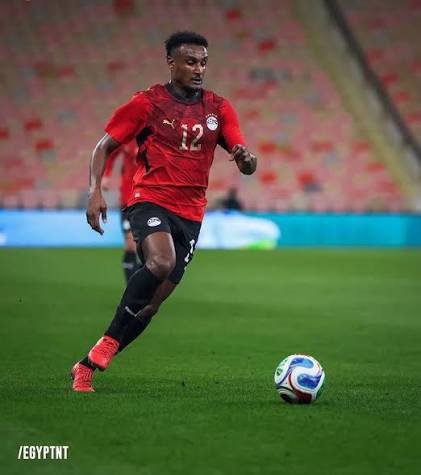
He started for the first time in the tournament during Egypt’s last-16 match against Argentina, where he produced an energetic performance on the wing against the world champions.
Although Egypt were eventually beaten, Hassan was among their more impressive players before being substituted in the 73rd minute because of physical exhaustion.
Tunisia had been considered a realistic option
Hassan had not initially ruled out an international career with Tunisia. His agent was also believed to have favoured that route, partly because the player could have had a clearer opportunity to establish himself in the Tunisian side.
There were concerns that competition for a similar attacking role in Egypt could limit his opportunities, particularly because of the presence of Mohamed Salah.
However, the financial discussions proved decisive. Tunisia did not accept the requested €100,000 signing bonus, while Egypt agreed to a lower figure of €70,000.
The outcome brought an end to one of the more notable recruitment contests involving a player eligible for both national teams.
For Egypt, the agreement offered an opportunity to add a young wide player with experience in French and Spanish football. For Tunisia, it meant losing a player whose background made him a possible future option for the Eagles of Carthage.
A player shaped in France and Spain
Hassan was born on 8 February 2002 in Bagnolet, France. His father is Egyptian and his mother is Tunisian, giving him eligibility to represent either country.
Before choosing Egypt in 2026, he played for France at youth level.
His club development began at the Paris FC academy before he moved to Châteauroux, where he made his first professional appearances.
He later joined Villarreal in Spain and gained further experience through spells with Mirandés and Sporting Gijón.
Hassan subsequently established himself at Real Oviedo, where his performances in Spain’s second division drew attention and helped place him on Egypt’s radar.
World Cup impact strengthens Egypt’s decision
Hassan did not need long to make an impression after committing to Egypt.
His display against Argentina showed his ability to contribute at the highest level, particularly in a match where Egypt faced the defending world champions.
He worked hard on the attacking flank and remained involved until his substitution, having expended considerable energy during the contest.
His emergence has added another attacking option to Egypt’s squad and provided early evidence that the federation’s pursuit of the player was worthwhile.
The story also illustrates how relatively modest differences in negotiations can influence a player’s international future. In Hassan’s case, the gap between Tunisia’s rejected €100,000 request and Egypt’s €70,000 agreement was enough to alter his destination.
That decision has now placed him among Egypt’s notable performers at the World Cup, while Tunisia have been left without a player they had hoped to recruit.