28 days from now, the biggest FIFA World Cup in history will begin across North America, carrying with it fresh dreams for Africa’s ten representatives and a new generation of stars eager to leave their mark on football’s grandest stage.
Yet as anticipation builds for the 2026 tournament, one debate continues to echo across the continent: who truly stands as Africa’s greatest World Cup goalscorer?
The numbers tell one story. Legacy tells another.
At the top of the scoring charts sits Asamoah Gyan, whose six World Cup goals remain the most by any African player. Across three tournaments, the Ghanaian forward delivered repeatedly on the biggest stage, scoring in Germany in 2006, exploding into global prominence during South Africa 2010, and adding two more goals in Brazil four years later.
His record is remarkable not simply because of the total, but because of the moments attached to it.
Gyan’s extra-time winner against the United States in 2010 remains one of the defining goals in African World Cup history, sending Ghana into the quarter-finals and within touching distance of becoming the first African nation to reach the last four. Few African players have carried the weight of a continent quite like he did during that unforgettable run.
But statistics alone do not settle the argument.
For many, the title of Africa’s greatest World Cup forward belongs to Roger Milla, the trailblazer whose brilliance at Italia ’90 changed how the world viewed African football.
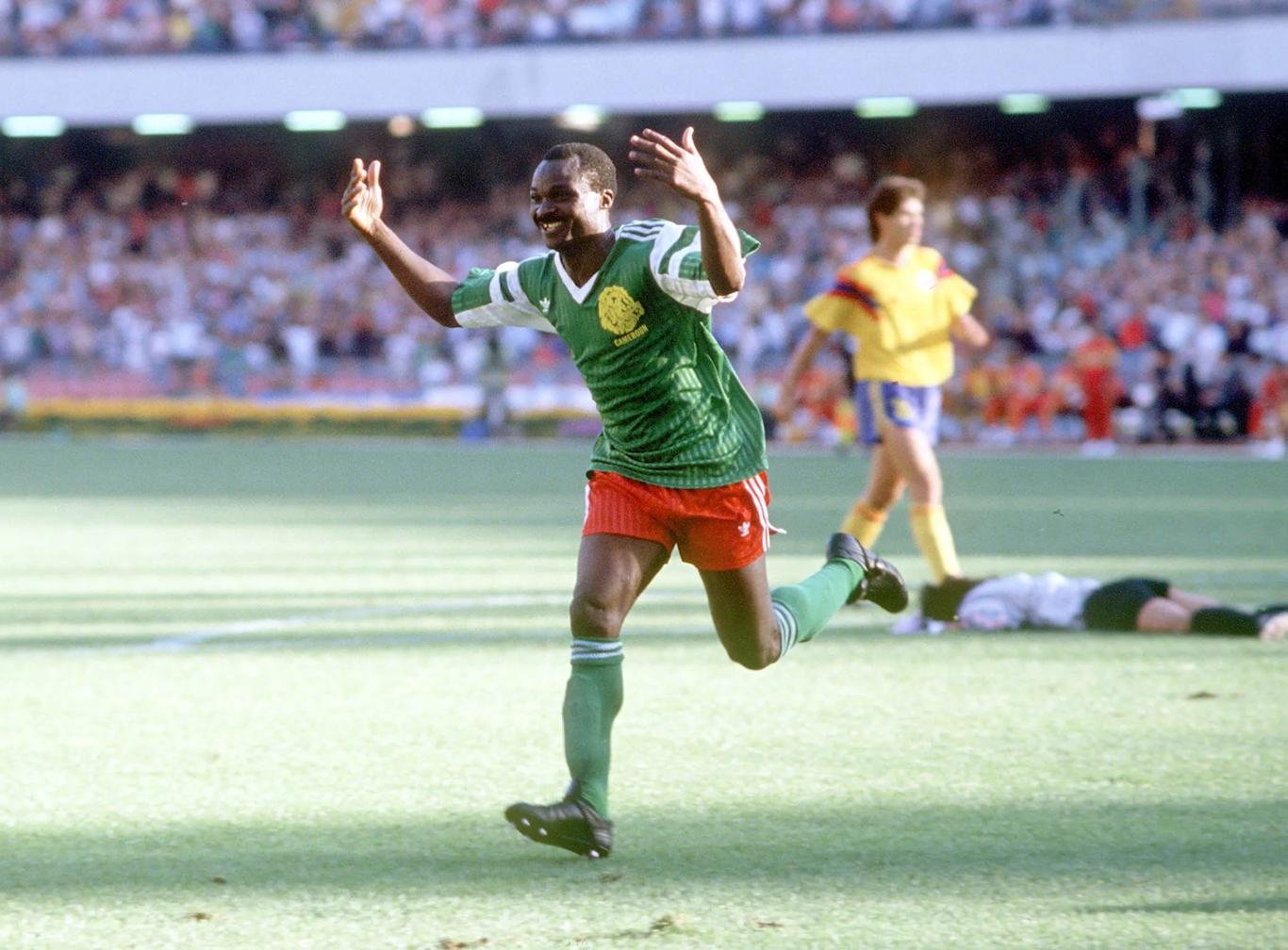
Milla scored four goals in Cameroon’s historic run to the quarter-finals in 1990, dancing at the corner flag and becoming a global icon at the age of 38. Four years later, he returned to score again in the United States, becoming the oldest goalscorer in World Cup history.
Unlike others on the list, Milla’s goals carried a revolutionary impact. Cameroon’s performances in 1990 shattered long-standing perceptions about African teams, opening doors psychologically for future generations. His influence stretched far beyond goals.
Then there is Samuel Eto’o, perhaps Africa’s most decorated modern striker at club level, yet a player whose World Cup numbers never fully reflected his stature. Eto’o scored three goals across four tournaments, but his broader influence on African football remains immense.
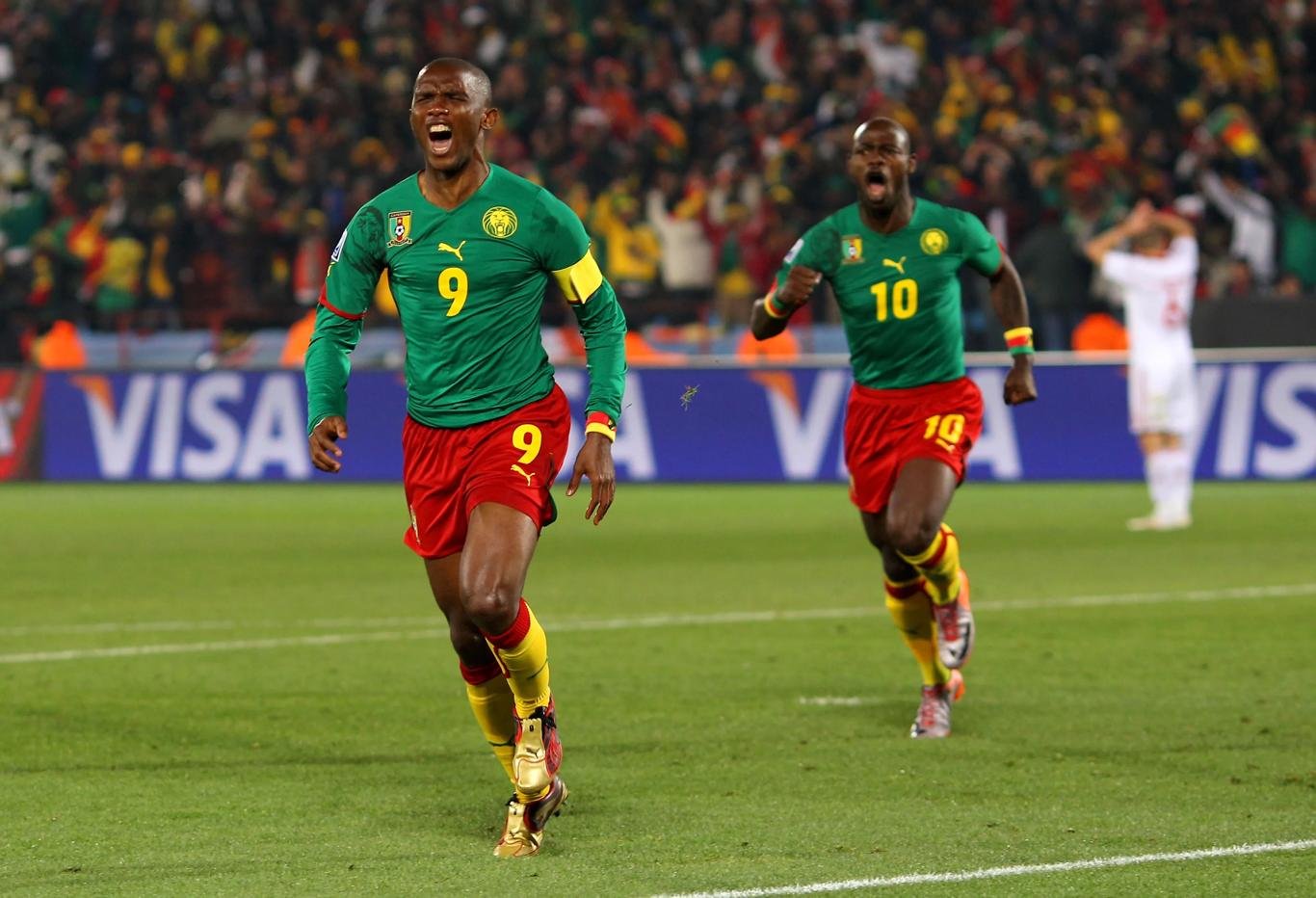
His inclusion in the debate highlights an uncomfortable truth about the World Cup: greatness at club level does not always translate onto the international stage.
Others built their reputations almost entirely through World Cup moments.
Ahmed Musa scored four goals in just seven matches, including two stunning strikes against Argentina in 2014. Few African players have matched his efficiency in front of goal at the tournament, averaging 0.57 goals per game.
Similarly, Papa Bouba Diop needed only one World Cup to become immortal in Senegalese football folklore. His famous winner against reigning champions France in 2002 remains one of the greatest upsets in tournament history, while all three of his goals came during Senegal’s astonishing run to the quarter-finals.
More recently, Youssef En-Nesyri etched his name into history by helping Morocco become the first African nation to reach the semi-finals of a World Cup in 2022. His towering header against Portugal may eventually rank among the continent’s most important goals ever scored.
And perhaps that is what makes the debate impossible to settle conclusively.
Should greatness be measured by total goals? By goals-per-game ratio? By iconic moments? Or by how deeply a player changed Africa’s standing in global football?
The answer often depends on generation and perspective.
Older fans may point to Milla’s pioneering influence. Ghanaians will understandably champion Gyan’s unmatched record and consistency. Nigerians may argue that Musa was Africa’s most explosive World Cup finisher. Cameroonians could still place Eto’o above them all because of the complete body of work beyond the tournament itself.
What is undeniable, however, is that Africa’s World Cup history has been shaped by individuals capable of producing unforgettable moments under extraordinary pressure.
And with the expanded 48-team tournament set to feature a record ten African nations in 2026, the continent may soon witness new names entering the conversation.
For now, though, the debate remains gloriously open. A contest between numbers, influence, legacy and unforgettable moments on football’s greatest stage.