When Morocco arrived in Qatar in 2022, they were widely seen as outsiders. By the time they left, they had changed the story of African football.
Now, four years later, the Atlas Lions return to football’s biggest stage with something they did not have before: expectation.
Their journey to the 2026 FIFA World Cup is not about qualifying anymore. It is about what comes next.
From perfect qualifiers to continental confidence, from a new tactical identity to a squad that still carries its core leaders, Morocco are no longer trying to surprise the world. They are trying to match what they have already achieved.
A perfect qualifying campaign sets the tone
Morocco became the first African nation to book their place at the 2026 World Cup, doing so in dominant fashion.
They won all eight of their CAF qualifying matches in Group E, finishing with 24 points and a goal difference that underlined their superiority. The campaign included 22 goals scored and just two conceded.
One of the standout performances came in a 5-0 win over Niger on 5 September 2025, a result that reflected both attacking strength and defensive control.
Even when tested, Morocco found solutions. A 2-1 win over Niger in March 2025, secured by late goals from Ismael Saibari and Bilal El Khannouss, showed a team capable of digging deep when needed.
Across the campaign, their defensive record was among the best on the continent, with six clean sheets and only minimal damage done by Zambia and Niger.
There was also attacking variety. A 6-0 win over Congo in June 2024 saw multiple scorers, including a hat-trick from Ayoub El Kaabi.
In short, this is not a team arriving in North America by chance. They arrive as a system already working.
The legacy of Qatar still defines them
To understand Morocco’s current identity, you still have to go back to Qatar 2022.
That tournament saw them become the first African side ever to reach a World Cup semi-final. Along the way, they beat Belgium in the group stage, eliminated Spain in the last 16, and knocked out Portugal in the quarter-finals before falling to France.
That run reshaped expectations across the continent. Morocco were no longer a team hoping to compete. They were a team expected to challenge.
That legacy has only grown since, especially with players like Achraf Hakimi, Yassine Bounou, Sofyan Amrabat, Brahim Diaz and Noussair Mazraoui still forming the spine of the squad.
Experience is no longer something Morocco lack. It is one of their biggest strengths.
A new coach, a new system, same ambition
The biggest change since Qatar has come on the touchline.
Walid Regragui, who led Morocco to their historic semi-final run and later guided them to the 2025 AFCON final, stepped down in 2026, saying: “the team needs a fresh face, a different energy, and a new perspective with a new coach”.
That new face is Mohamed Ouahbi.
Ouahbi arrives after guiding Morocco’s U20 side to a first-ever World Cup triumph in 2025, defeating teams including the United States, Argentina and France on the way to the title.
Tactically, he has brought continuity but also subtle change. While Regragui often used a 4-3-3, Ouahbi has leaned towards a 4-2-3-1 system, already tested in matches against Ecuador and Paraguay.
The shift has already changed player roles. Neil El Aynaoui, for example, has moved into a deeper pivot role where he has impressed, scoring in successive friendlies. Ismael Saibari has also benefited, thriving between midfield and attack after a strong club season.
The next generation is already here
If the 2022 team was built on experience, this version is blending it with youth.
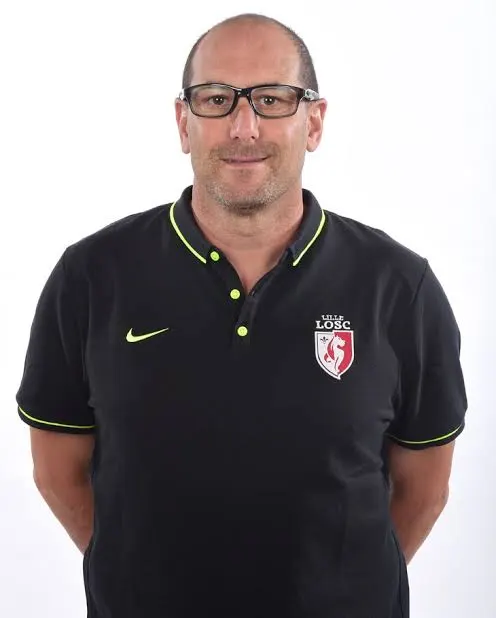
One of the standout names is Ayyoub Bouaddi, still only 18 but already with close to 100 appearances for Lille. A defensive midfielder by trade, he has also been used at right-back, showing his tactical flexibility.
His defensive numbers underline his growing influence, with 151 recoveries and 37 interceptions in Ligue 1, placing him among the division’s most effective young midfielders.
For Morocco, this balance between established stars and emerging talent is central to their identity going into the tournament.
A group that demands no comfort
Morocco’s path in North America is far from straightforward.
They have been drawn into Group C alongside Brazil, Scotland and Haiti. A top-two finish would likely set up a knockout tie against opponents from a strong Group F, where the Netherlands, Japan, Sweden and Tunisia await.
The opening match against Brazil on 13 June in New York/New Jersey is already being seen as a key early test.
From there, they face Scotland in Boston and Haiti in Atlanta, with each fixture carrying its own pressure.
Expectation replaces surprise
Perhaps the biggest shift for Morocco is psychological.
In 2022, they played with freedom. In 2026, they will play under scrutiny.
They are expected to qualify from their group. Many believe they can top it. Some even wonder whether another deep run is possible.
The talent is there. The structure is stable. The experience is proven.
What remains is the hardest part in football: doing it again when everyone is watching.
And for Morocco, that is exactly the challenge they have been building towards since the night they changed African football history.