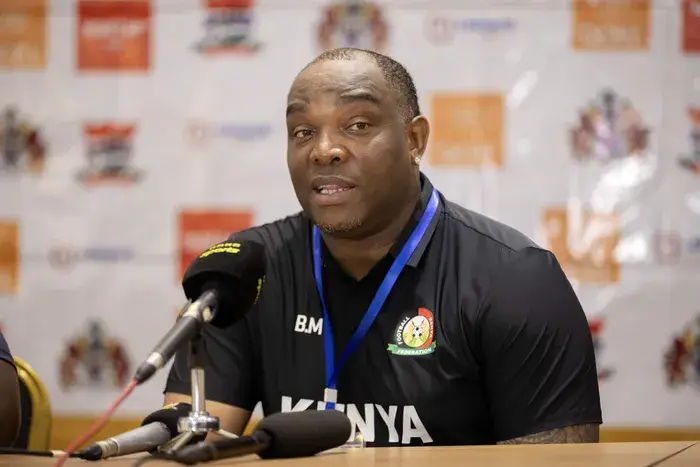
Former Nigeria international Sam Sodje has raised concerns about deeper structural problems within the country’s football system, despite describing the national team’s recent performances as encouraging.
Speaking after Nigeria’s participation in a four-nation tournament, Sodje said the Super Eagles had delivered a “decent outing”, pointing to signs of progress under the current coaching setup. However, he warned that underlying administrative and technical shortcomings continue to hold the team back.
“It has been a decent outing played two games drew one, you can see what the manager is trying to do, he is trying to get identity for the team, we saw few players make their debut, decent players, we saw a decent outing in both games,” Sodje said.
His remarks come at a time of heightened scrutiny for the Nigeria Football Federation (NFF), following the country’s failure to qualify for the 2026 FIFA World Cup. The disappointment has intensified calls for reform, with critics arguing that Nigeria risks falling further behind its international rivals.
While acknowledging the work being done by the coaching staff, Sodje stressed that the issues facing Nigerian football extend beyond the pitch. He urged stakeholders to adopt a long-term approach, focusing on preparation, organisation and governance.
“It’s gone now we have to start thinking about where we are as a country, the NFF has to be reformed, the old guards has to give way, we have to understand that preparation is key,” he added.
The former defender was particularly critical of the federation’s technical structure, arguing that responsibility for strategic direction lies with its Technical Committee rather than the national team coaches.
“We have to start preparing for the next one because we are so behind when it comes to organization, technically we are so behind as well.
“When I say technically I am not talking about Eric Chelle and the technical crew of the national team. I am talking about the technical committee at the NFF, they have to do better.”
Sodje’s comments reflect a broader concern among observers that Nigeria lacks a clearly defined football philosophy. He warned that without a unified vision and improved planning, progress on the field could be undermined by persistent off-field challenges.
“We have to know exactly what we want for our country, it’s not fair to the fans we deserve better.”
Pressure is expected to grow further in the coming months, with NFF elections scheduled for September. Analysts say the vote could prove decisive in shaping the future of Nigerian football, particularly if it leads to significant leadership changes.
Observers caution that without meaningful reforms and a coherent strategic plan, the Super Eagles could face continued struggles on the international stage, including the risk of missing out on future major tournaments.
Despite the concerns, Sodje’s assessment suggests there are still reasons for optimism on the pitch. The emergence of new players and attempts to establish a distinct playing identity have been viewed as positive steps.
However, as debate continues over the direction of Nigerian football, his message is clear: progress will depend not only on performances during matches, but also on the structures guiding the game behind the scenes.