The race to lead the Democratic Republic of Congo’s football federation appears effectively over after only one list of candidates was approved for next week’s presidential election.
Fédération Congolaise de Football Association, commonly known as FECOFA, confirmed that the list led by Véron Mosengo-Omba was the only candidature validated for the executive committee elections scheduled for 20 May.
The decision by the federation’s electoral and appeals commissions means Mosengo is now on course to be elected by acclamation, barring any late developments.
The outcome had been widely anticipated in recent days after several rival candidates either withdrew or were ruled ineligible during the vetting process.
Among those initially seeking to contest the presidency were former DR Congo captain Shabani Nonda, Jean-Didier Masamba and Bosco Mwehu.
However, Nonda was among six candidates rejected earlier in the process, while Masamba and Mwehu later withdrew from the race.
Masamba is reported to have previously worked closely with former FECOFA president Constant Omari, while Mwehu currently heads the committee managing the country’s domestic championship.
Their exits left Mosengo as the clear favourite to succeed at the top of Congolese football administration.
The development represents another major step in the career of Mosengo, who previously served as secretary general of Confederation of African Football and has long been viewed as an influential figure within African football governance circles.
According to reports by Sport News Africa, Gianni Infantino is said to have personally supported Mosengo’s rise, with the FIFA president reportedly lobbying on behalf of his trusted associate in discussions involving Félix Tshisekedi.
Mosengo has increasingly been portrayed as the preferred candidate of the Congolese authorities, although the process leading to the election has also generated criticism and controversy.
The FECOFA elections have reignited debate within Congolese football over transparency and governance standards, particularly after allegations of ministerial influence and claims involving fraudulent documents surfaced during the electoral process.
While no formal findings on those accusations have been announced publicly, the controversy has added tension to an election already viewed as highly significant for the future direction of football in the country.
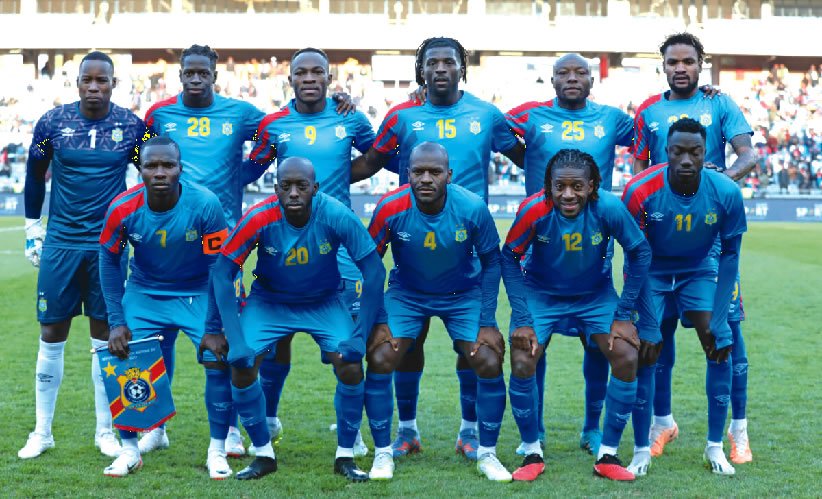
DR Congo remains one of Africa’s most football-passionate nations, with supporters hoping new leadership at FECOFA can help improve administration, strengthen domestic competitions and restore stability around the national game.
The upcoming election comes at a time when African football governance continues to face intense scrutiny across the continent, with FIFA and CAF repeatedly stressing the importance of transparent electoral processes and institutional independence.
For Mosengo, the anticipated victory would mark a return to frontline football leadership in his home country after years operating at continental level with CAF.
Unless there is a dramatic late change, the May 20 vote now appears set to become a formality rather than a contest, with FECOFA preparing to usher in a new era under a single approved candidate.

![French national team players celebrate a goal—group hug on the pitch in blue kits.] , French national team players celebrate a goal—group hug on the pitch in blue kits.] ,](https://african.football/wp-content/uploads/2026/07/DUO-1.jpg "Deschamps warns France against underestimating Morocco in World Cup quarter-final – African Football")