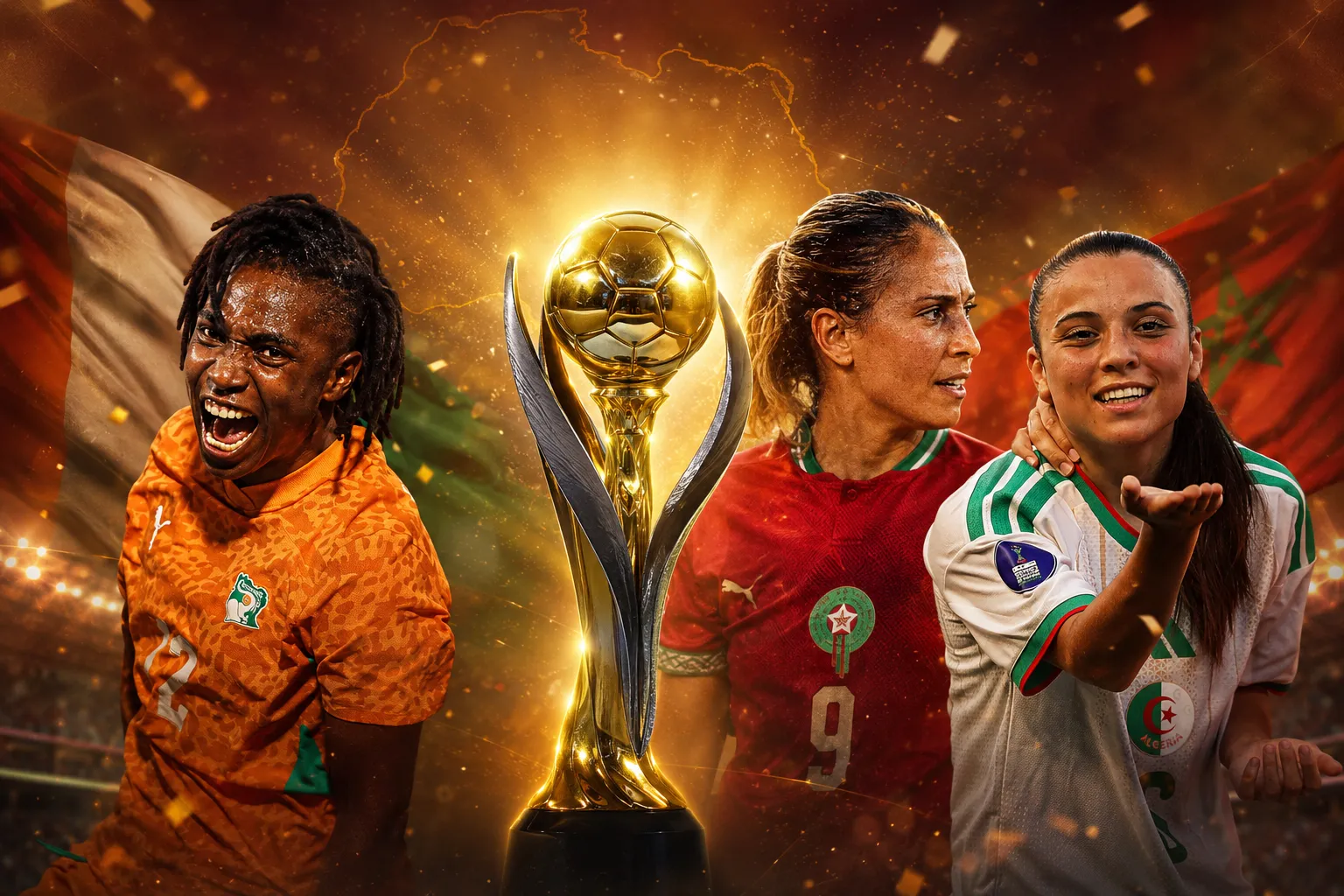
Morocco will begin a new bid for continental supremacy on home soil as the 2024 Women’s Africa Cup of Nations (WAFCON) finals get under way in the North African kingdom from 25 July to 16 August.
The continent’s flagship women’s football tournament, expanded and strengthened in recent editions, will feature 16 nations split into four groups of four, all vying for the title, regional pride and a growing global audience.
Hosts Morocco headline Group A, where they are joined by Senegal, Algeria and Kenya in what is expected to be a fiercely contested section.
Atlas Lionesses chase redemption under World Cup-winning coach
Morocco’s women’s national team, known as the Atlas Lionesses, will carry both expectation and pressure as tournament hosts, having reached the WAFCON final in 2022 and again fallen just short in 2024, losing on both occasions to Nigeria’s Super Falcons.
This is Morocco’s fourth appearance at the finals (1998 and 2000 group stages, 2022 and 2024 runners-up), underlining a remarkable recent rise after decades in the shadows of African women’s football.
They are captained by influential midfielder Ghizlane Chebbak, who plays for Al-Hilal, and guided by one of the most high-profile coaches in the women’s game, Spaniard Jorge Vilda.
Vilda, 43, steered Spain to the 2023 FIFA Women’s World Cup title before taking charge of Morocco. He has already led the Atlas Lionesses to a WAFCON final and will now be expected to turn near-misses into a historic first continental crown.
Morocco come into the tournament ranked 73rd in the world, but with home advantage, improved infrastructure and growing domestic interest, they are widely seen as one of the favourites to progress deep into the competition.
Algeria’s Fennecs bank on experience and stability
Algeria, nicknamed the Fennecs, bring considerable WAFCON pedigree to Group A, with six previous appearances at the finals (2004, 2006, 2010, 2014, 2018 and 2024, when they reached the quarter-finals).
Ranked 74th, the Algerians are captained by defender Sofia Guellati, who plays her club football in France with EA Guingamp.
The team is coached by Farid Benstiti, a former Paris Saint-Germain women’s boss and one of the more experienced tacticians in the competition. Benstiti has been in charge of the Algerian set-up since 2023 and is tasked with turning the side’s consistency in qualifying into a genuine push beyond the last eight.
With a solid defensive base and a core of players plying their trade in European leagues, Algeria will be seen as a potential dark horse in the group.
Senegal’s Lionesses of Teranga eye next step
Senegal’s women, the Lionesses of Teranga, arrive in Morocco aiming to build on steady progress at recent tournaments.
They have appeared at WAFCON three times – in 2012 (group stage), 2022 (quarter-finals) and 2024 (quarter-finals) – and are seeking to make the leap into the continental elite by reaching the latter stages.
Ranked 79th, Senegal are captained by midfielder Safietou Sagna, who plays in France’s second tier for US Saint-Malo.
On the touchline is Mame Moussa Cisse, who has overseen the team since 2019. An accomplished coach, Cisse is credited with the side’s tactical organisation and resilience, and will be looking to turn back-to-back quarter-final appearances into a semi-final breakthrough.
Kenya’s Harambee Starlets return to continental stage
Kenya’s Harambee Starlets complete the Group A line-up, returning to the WAFCON finals for only the second time in their history.
Their sole previous appearance came in 2016, when they exited at the group stage, underlining the scale of the challenge facing a side ranked 128th in the world.
Kenya are captained by defender Dorcas Shikobe, who plays in Greece for Seirines Grevenon WFC.
The team is coached by 42-year-old Beldine Odemba, a CAF A licence holder and qualified coaches’ instructor. Odemba combines her national-team role with duties as under-20 coach and as manager of Kenya Police Bullets FC, reflecting the multi-tasking reality of many women’s football set-ups on the continent.
Her focus in Morocco is expected to be on organisation, competitive performances and laying foundations for future qualification campaigns, even as the Starlets attempt to spring an upset in a challenging group.
High stakes in a finely balanced group
With Morocco’s star power and home backing, Algeria and Senegal’s tournament experience, and Kenya’s hunger to prove themselves on a big stage, Group A promises a mix of established contenders and ambitious underdogs.
Only the top two sides are guaranteed a place in the knockout phase, putting early pressure on every fixture as Africa’s premier women’s football competition begins in Morocco.