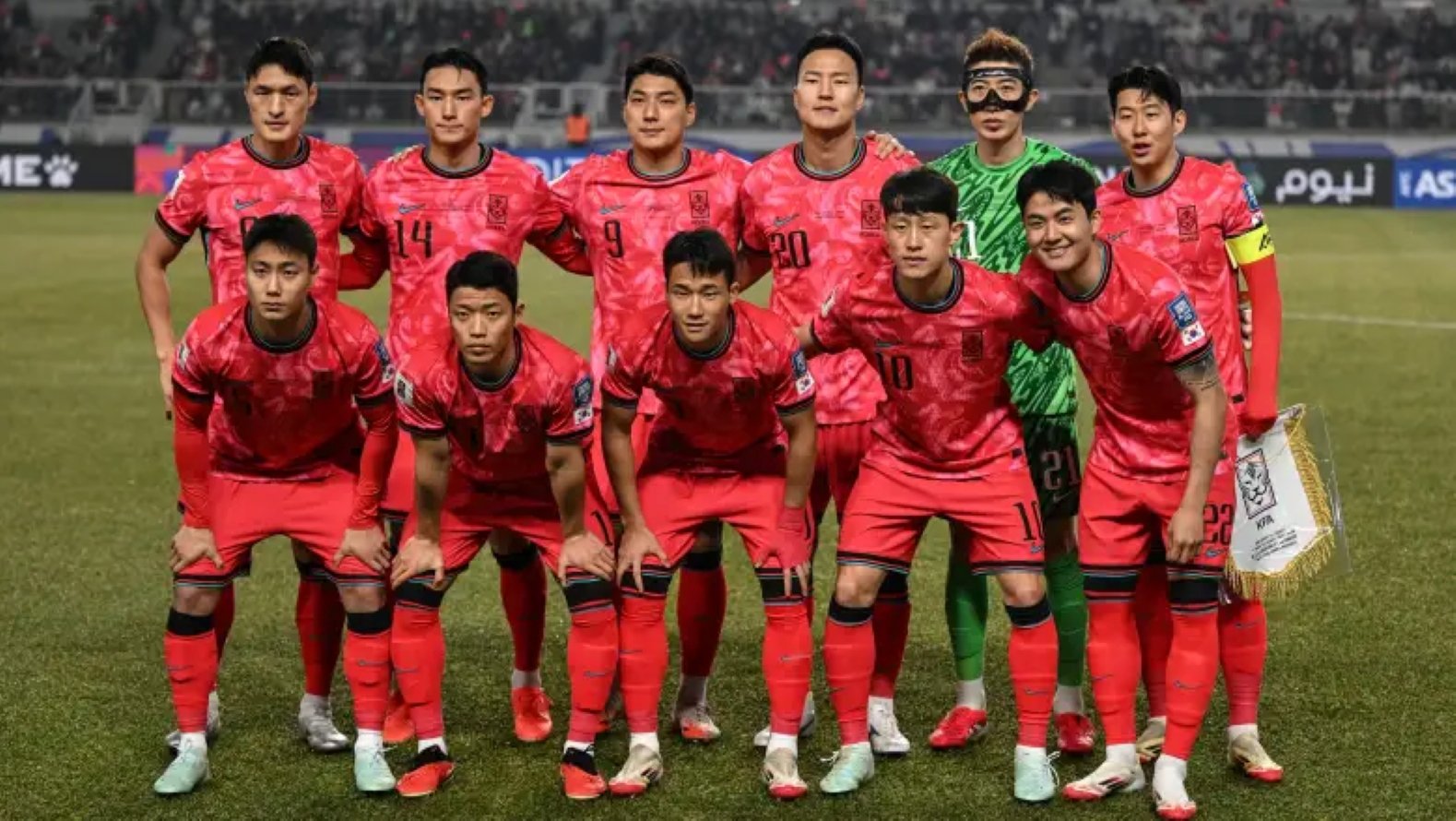
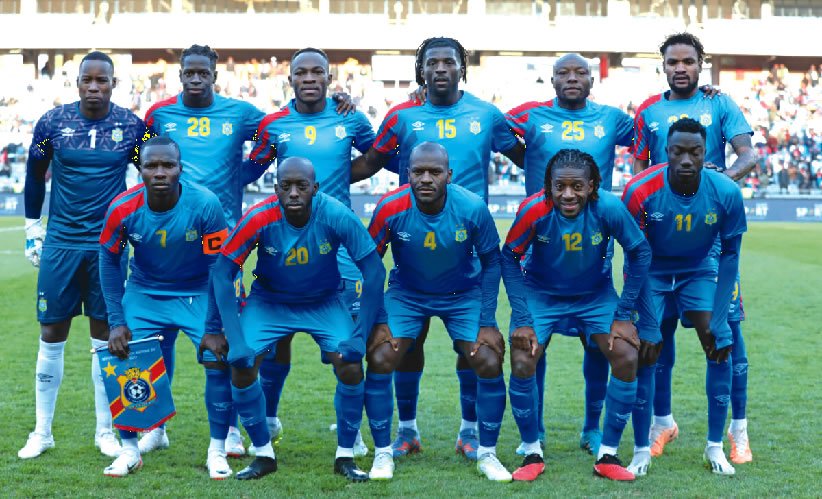
World football is set for another seismic shake-up after South American federation president Alejandro Dominguez claimed the 2030 World Cup will feature 64 national teams – the biggest expansion in the tournament’s 100‐year history.
Landmark change for World Cup’s centenary
Dominguez, head of the South American Football Confederation (CONMEBOL), said on his social media accounts that the 2030 edition would be enlarged to 64 participants as part of celebrations marking the centenary of the first World Cup, held in Uruguay in 1930.
The assertion, if confirmed by world governing body Fifa, would mean another rapid escalation in the size of the competition, just as world football prepares for the first 48‐team World Cup in 2026, to be co-hosted by the United States, Canada and Mexico.
The World Cup began with just 13 teams in 1930 and later stabilised at 16 sides for decades, before growing to 24 in 1982 and then 32 in 1998. The 2026 edition was already billed as the biggest in history with 48 nations – but a 64-team finals would represent a radical new chapter.
Multi-continent hosting plan
The 2030 World Cup has already been designated as a unique, cross‐continent event.
Under the current plan, Uruguay, Argentina and Paraguay will each stage one match to honour South America’s role in the origins of the competition, including the inaugural tournament in Montevideo.
The remainder of the matches are due to be hosted jointly by Morocco, Portugal and Spain, making 2030 the first World Cup to be played in both Europe and Africa, with ceremonial opening fixtures in South America.
Dominguez’s comments suggest that this already unconventional format could be accompanied by an unprecedented expansion in the number of finalists, significantly altering the sporting and logistical demands placed on host nations.
Qualification shake-up inevitable
Any move to 64 teams would have profound consequences for World Cup qualifying across every continent.
The increase from 32 to 48 participants for 2026 has already triggered a complete redesign of qualification formats, with confederations rebalancing slots and play-off routes. An additional expansion would compel another sweeping overhaul, potentially offering more berths to Asia, Africa, CONCACAF and Oceania, while also reshaping South America’s and Europe’s traditional pathways.
The article from CONMEBOL noted that such a jump to 64 finalists would “directly and inevitably” affect the qualification system, though no detailed breakdown of potential slot allocations has yet been made public.
Infantino had hinted at further growth
Fifa president Gianni Infantino has previously left the door open to further expansion beyond 2026.
He has said that world football’s leaders would “study this matter after” the 2026 World Cup in North America, indicating that nothing was fixed for 2030 but that the idea was under active consideration.
Infantino has repeatedly framed expansion as a question of global inclusion rather than European or South American dominance.
He stated: “عند تنظيم كاس العالم، من المهم ان ننظمها للعالم اجمع، ليس فقط لاوروبا وامريكا الجنوبية، بل للعالم باكمله فعليا. يجب ان يسمح لكل دولة بان تحلم بالمشاركة في كاس العالم”.
Translated, his remarks emphasise that the World Cup should be organised for “the entire world” and that every country should be allowed to dream of taking part in the tournament.
Fifa yet to confirm 64-team format
Despite Dominguez’s strong claim, Fifa has not formally ratified a 64-team format for 2030, and key issues remain unresolved, including the structure of the group stage, the total number of matches and the duration of the competition.
The 48-team format for 2026 has already required Fifa to revisit its initial proposals over how to divide teams into groups and how many games will be played.
A further expansion to 64 sides would take the World Cup into uncharted territory, intensifying debate about player workload, calendar congestion and whether the tournament can grow further without diluting quality.
For now, Dominguez’s announcement has intensified speculation that the World Cup’s centenary edition will not only span three continents but also rewrite the record books for the number of nations involved.