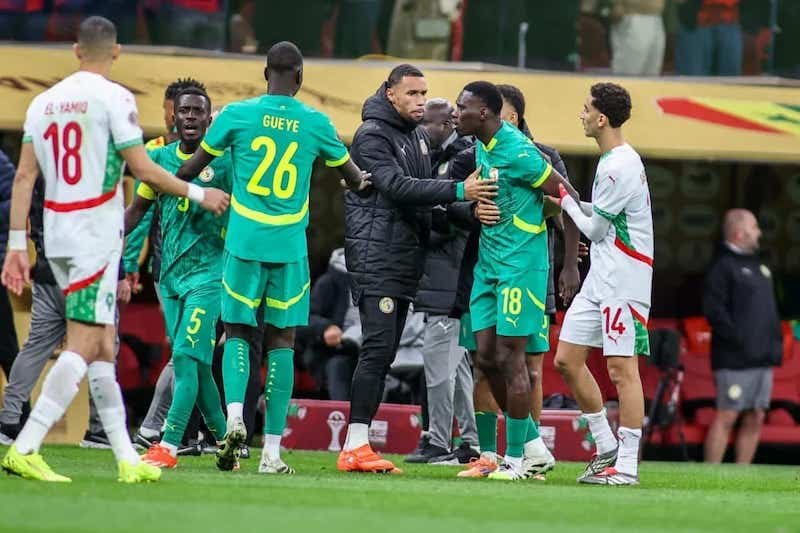
Morocco’s cautious public statements before the Court of Arbitration for Sport (TAS) ruling on the Africa Cup of Nations 2025 dispute, followed by a last-minute complaint about an alleged conversation involving one of the arbitrators, have raised questions over whether the country expected an unfavourable decision.
The developments came during 24 hours of conflicting reports and renewed tension between the Moroccan and Senegalese football authorities.
Conflicting reports before the verdict
On Monday, 23 November, the Spanish newspaper Marca reported that Morocco would retain its continental title. It later withdrew that claim and changed its headline.
A source close to the case, quoted by Le360, denied that the verdict had been leaked and said the decision was still expected the following day. On X, journalist Youssef Amzile also said no information had come from the Federation Royale Marocaine de Football (FRMF), while noting that this alone did not disprove Marca’s report.
The following morning brought another unexpected development. According to RMC Sport, the FRMF sent an official letter to the TAS concerning an alleged telephone conversation on Sunday between Ulrich Haas, one of the three arbitrators assigned to the case, and Abdoulaye Fall, president of the Senegalese Football Federation.
Journalist Romain Molina also confirmed the report, saying the conversation had lasted several minutes.
Morocco not only objected to the expected TAS decision but also argued that the alleged exchange raised concerns about the arbitrator’s independence and impartiality. However, the TAS’s head of communications subsequently said the organisation had received no correspondence from the FRMF on the matter.
The Senegalese Football Federation, meanwhile, denied that the call had taken place.
The dispute could therefore develop into a new legal confrontation.
How did Morocco learn of the alleged call?
The central unanswered question is how the Moroccan side became aware of the exchange, if it did take place. A private telephone call would not ordinarily be publicly known, while the timing of the complaint – only a few hours before the verdict was due to be notified – has also attracted attention.
The FRMF Xtra account on X responded ironically: “Moroccan intelligence services are among the world’s elite.”
Behind the joke, however, lies a genuine question about how such information could have been obtained.
The sequence of events has added to the uncertainty. First came speculation about a supposed leak suggesting a decision in Morocco’s favour. Then, shortly before the ruling, an alleged incident emerged that could potentially provide grounds for a further appeal.
There is no evidence to establish that Morocco had anticipated an adverse verdict. Nevertheless, the events of the final hours ensured that uncertainty continued until the end.
Whatever the eventual outcome – if there is one – the case has developed into one of the most extraordinary sagas in African football, and perhaps in the wider game.