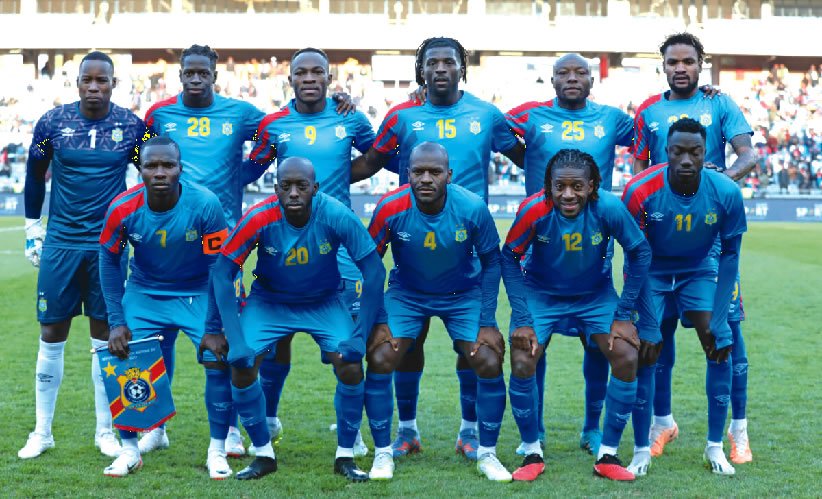
The race to lead DR Congo football has taken a dramatic turn after several high-profile candidates were provisionally rejected from the upcoming elections of the national governing body.
The electoral commission of the FECOFA has ruled a number of applications inadmissible, including that of former international striker Shabani Nonda.
The decision, announced as part of the vetting process ahead of the vote, has sparked fresh debate about transparency and governance within the country’s football structures.
Also affected by the ruling is Aziz Makukula, alongside Jean-Claude Mukanya, Jean-Max Mayaka, Renie Patout Mangenda and Kevin Issa.
However, the commission has made it clear that the rejection is not final. Instead, the candidates have been asked to revise and resubmit their applications in line with regulatory requirements.
According to officials, the candidacies remain under review pending compliance, with the process designed to ensure that all contenders meet the established criteria.
The move is being interpreted as a strict enforcement of electoral rules rather than an outright exclusion.
The development has nonetheless intensified scrutiny around the electoral process, which is seen as a defining moment for the future of football administration in DR Congo.
With key figures temporarily sidelined, attention has shifted to how quickly they can address the issues raised and re-enter the race.
In contrast, several candidates have already been cleared to proceed.
Véron Mosengo, Jean-Didier Masamba and Bosco Mwehu were among those whose applications were validated, positioning them as early frontrunners ahead of the election scheduled for 20 May 2026.
The stakes are high. A total of 68 voters will determine the composition of the next executive committee, representing a broad cross-section of the Congolese football ecosystem.
This includes delegates from provincial leagues, top-tier and second-tier clubs, women’s football, youth structures, referees, coaches and other key stakeholders.
The structure of the voting body reflects an attempt to balance representation across different sectors of the game.
Provincial leagues account for 22 votes, while clubs contribute a combined total from Ligue 1 and Ligue 2.
Additional votes are allocated to national leagues, technical groups, medical representatives and football associations, underlining the complexity and inclusiveness of the process.
For many observers, the provisional rejection of several prominent candidates highlights the increasing emphasis on governance and accountability within African football.
Ensuring that all applicants meet the necessary standards is seen as crucial to strengthening institutional credibility.
At the same time, the situation has raised questions about consistency and clarity in the application of electoral rules.
With only a limited window to rectify their files, the affected candidates now face a race against time to remain in contention.

![French national team players celebrate a goal—group hug on the pitch in blue kits.] , French national team players celebrate a goal—group hug on the pitch in blue kits.] ,](https://african.football/wp-content/uploads/2026/07/DUO-1.jpg "Deschamps warns France against underestimating Morocco in World Cup quarter-final – African Football")