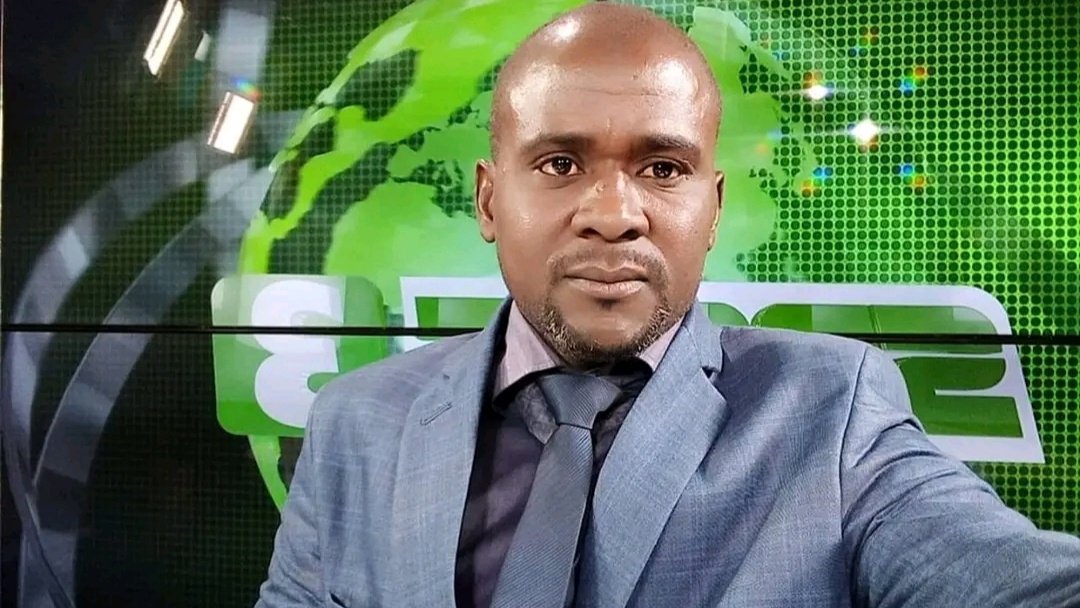
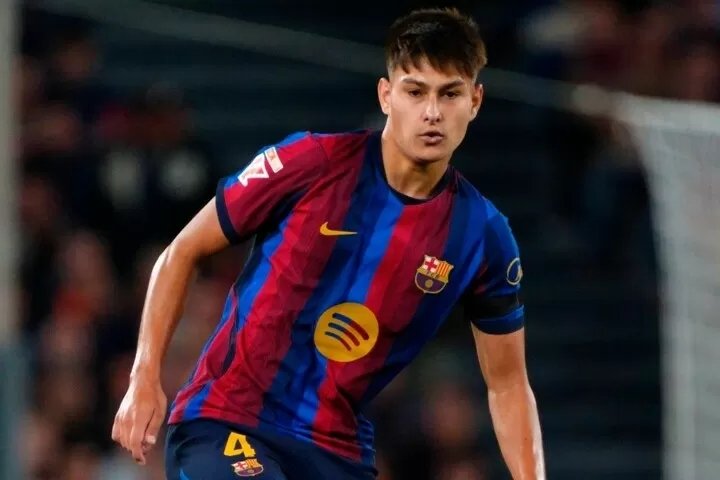
Como U19 coach Gianluca Falsini says the club’s youth academy is built around possession football and individual development, in line with the principles used by Cesc Fabregas with the first team.
Falsini, who previously enjoyed a successful spell at Roma, was appointed by Wilman Suwarso and Connor Roberts to oversee the development of Como’s youth side after their promotion to Group 1 of the youth league.
“From a personal perspective, I am very, very satisfied with my choice,” Falsini told TuttoMercatoWeb.
“Como are a club undergoing transformation, with a different understanding of work and of people, and with a mid-to-long-term vision. The club I see is even better than I originally imagined.
“Every day they try to improve, from the infrastructure to each individual and their personal growth. You can feel that football is present 24 hours a day, and the players are always at the centre of the project.”
Como are competing in the youth league, the UEFA Youth League and the Coppa Italia, meaning Falsini describes this as his “year zero” at the club.
“It is not because of the league itself, but because there are so many tasks,” he said. “The club had to build itself from this perspective and it has done very well.
“With such a short preparation period, we have had to make adjustments, but the people I work with, from my coaching staff to Famien, Connor Roberts and Fabregas, are professionals of the highest level. We are lucky to be together every day because we are all improving.”
Developing individuals
Falsini says Como’s primary objective is to maximise the potential of each player rather than focus solely on the team’s results.
“Their demands were simple: develop the talent we have as much as possible,” he said. “The main project is the individual players, not the team as a whole.
“Of course, nobody wants to finish last and nobody wants to be embarrassed in an important competition such as the UEFA Youth League. But the priority is to develop these boys and give as many of them as possible playing time.”
Como’s approach is based on controlling matches through possession.
“Once we have the ball, many options appear,” Falsini said. “The game moves from static possession areas to dynamic ones before progressing into the opponent’s final third. These concepts are very similar to those of the first team.”
The teams do not use identical formations. Fabregas’s side plays 4-2-3-1, while Como U19 generally line up with three central defenders in a 3-4-3, 3-4-1-2 or 3-4-2-1.
“The philosophy is the same,” Falsini added. “The ideas come from the Spanish youth academy system: playing more through the centre than out wide and maintaining a high density within 10 to 12 metres of the ball.
“When possession is lost, the pressing has to be almost perfect. We also depend on individual actions and movement without the ball to create space. The principles are the same as the first team; only the formation changes because the players have different characteristics.”
UEFA Youth League experience
Como’s UEFA Youth League squad cannot simply be the same team used in the domestic competition. The club wants more players to feature, while competition rules require each 20-man squad to contain 14 homegrown players who have been registered with the club for at least two years. Only three players from the 2007 age group can be selected.
That means recent signings such as Borsellino and Zamani are unable to play in the competition, while there are also limits on the number of non-local players.
Even so, Falsini believes the tournament is a major accelerator for development.
“You face teams and players whose individual ability is above the average level of Group 1 of the youth league, which is already a very good competition,” he said. “The quality is almost like first-team football.”
He also highlighted Papaccioli’s opportunity to play for the first team in the Champions League after Fabregas gave the youngster his chance.
“Once you come up against clubs such as Leipzig, Lens, Manchester United or Feyenoord, you realise the level is completely different from Group 1,” said Falsini. “It is an excellent accelerator for growth.”
Como drew 1-1 with Leipzig after conceding an equaliser in the 84th minute, despite having missed five or six clear chances. Leipzig had beaten Sevilla the previous week and then defeated Internazionale 3-0 a week later.
Como were missing several important players, but Falsini says the club’s policy is to use such fixtures to give opportunities to those with less playing time. Papaccioli, Cassano, Grilli and De Paoli have all since been promoted to the first team.
“It is not easy to produce players for Serie A, or even the Champions League,” he said.
Papaccioli and Cassano
Papaccioli joined Como at 16 and was around the first team when Fabregas arrived. He then suffered a cruciate ligament injury.
“The club gave him two or three more months than usual to recover slowly because they believed there was something special about him,” Falsini said.
“They told him, ‘We will take care of you like we took care of Nico Paz.’ The Como doctors and physiotherapists deserve great credit.”
Papaccioli’s first game after an absence of eight to nine months was against Internazionale in the youth league. Falsini brought him on for 20 minutes and he scored in the 90th minute to secure a 2-2 draw while Como had played with 10 men for almost an hour.
He later scored against Manchester United in the UEFA Youth League.
“I call him Como’s image representative,” said Falsini. “Zero tattoos, zero earrings and excellent school grades. He is Brazilian with a European mindset, works very hard and even trains on the pitch on his days off.”
Falsini also praised Riccardo Cassano, who was selected for a special national-team training camp and scored the previous Sunday.
“He understands the game a second and a half faster than other players,” Falsini said. “He is incredibly intelligent and his technique is exceptional. He scored a beautiful goal against Fiorentina, very similar to the one he scored in the UEFA Youth League a few days earlier.
“He has a strong mentality, is ambitious, wants to train, respects everyone and has a great personality. His weakness at the moment is his absolute speed; he is not fast.
“He reminds me a little of Matic during his Sassuolo days, although their physical attributes are different. He still needs to improve the speed of his actions when striking the ball, but his starting point is already very good and he has a strong desire to win.”
Title race and player development
Falsini believes the January transfer window could determine the youth league title race.
“On paper, Roma are definitely the strongest at the moment,” he said. “Internazionale and Parma are slightly ahead of the other teams in terms of overall strength.
“But the cup competitions also have an impact. Playing in the UEFA Youth League uses a lot of physical and mental energy over three months. The January transfer window will be very important, particularly because of departures.”
Among opposing players, Falsini singled out Croci and Gasparello, as well as Fiorentina’s Forte. He also knows Cagliari’s Sugameli, whom he coached, although Sugameli has already appeared in Serie A. Falsini added that Parma are likely to have several strong players, despite Como not yet having faced them.
His working day usually begins at home with breakfast before he arrives at the office between 09:00 and 09:30. He and his staff plan individual and group sessions, have a light meal at about 12:30 and begin one-to-one match analysis with players at 13:30.
Training starts at 14:00 and lasts about two hours. At 16:00, the staff review the session and prepare for the following day. Falsini normally leaves between 17:30 and 18:00, takes an hour for himself and returns to work on the plans in the evening.
He said the routine differed from his time at Roma, where lunch could not be taken at Trigoria and more of his afternoon work was done at home.
Falsini believes every young player needs an individual technical plan. He said Lotani, Palma and Liberali are exceptions rather than the norm, while comparing the different paths taken by Liberali and Papaccioli.
After Papaccioli scored in the UEFA Youth League, the club interviewed him and later spoke to Liberali, who replied: “I’m happy for him. It was his first appearance and I assisted him.”
Although Liberali is a year older, his development included playing Serie C with Milan, becoming a half-season starter in Serie B with Catanzaro and then joining Como because of his natural talent.
“Every young player has his own rhythm and stages,” Falsini said. “Players from the 2007 age group who are in the youth league should, by January, be competing with adults, even if that is in Serie C or Serie D.
“B teams are important, but they also need a project and a plan tailored to each player. The intensity of the UEFA Youth League is already very close to adult football. Keeping a player in the youth league simply to win youth championships can waste a year of their football maturity.”
Relationship with Fabregas and Suwarso
Falsini praised Fabregas for maintaining a close relationship between the first team and academy.
“He is completely dedicated to the first team but is extremely polite,” said Falsini. “Whenever I ask for advice or want to speak to him, he and his staff are open and willing to help.
“His work at Como is clear, and it is rare for a first-team coaching staff and a youth academy to be so close.”
Falsini said he met Suwarso for a few hours in the summer and again after the match against Internazionale, when the club president told him in English: “Well done, coach, great character, I’m proud of you.”
“Hearing that from the club owner makes you very happy, but it also increases our responsibility,” Falsini said.
Como invested heavily in young Italian players during the summer, and Falsini hopes the academy can establish itself alongside those of Internazionale, Milan, Parma, Fiorentina, Atalanta and Roma.
“That question should be asked of Facchi and Connor Roberts, not me,” he said. “But I really hope so. Our aim is to show that Como are not just a nice story, but a club that can genuinely develop young players.
“Investing locally and maintaining a strong Italian core is our direction. In our last match against Fiorentina, for example, we had only two foreign players on the pitch. We hope the best talents will see Como as their future choice.”