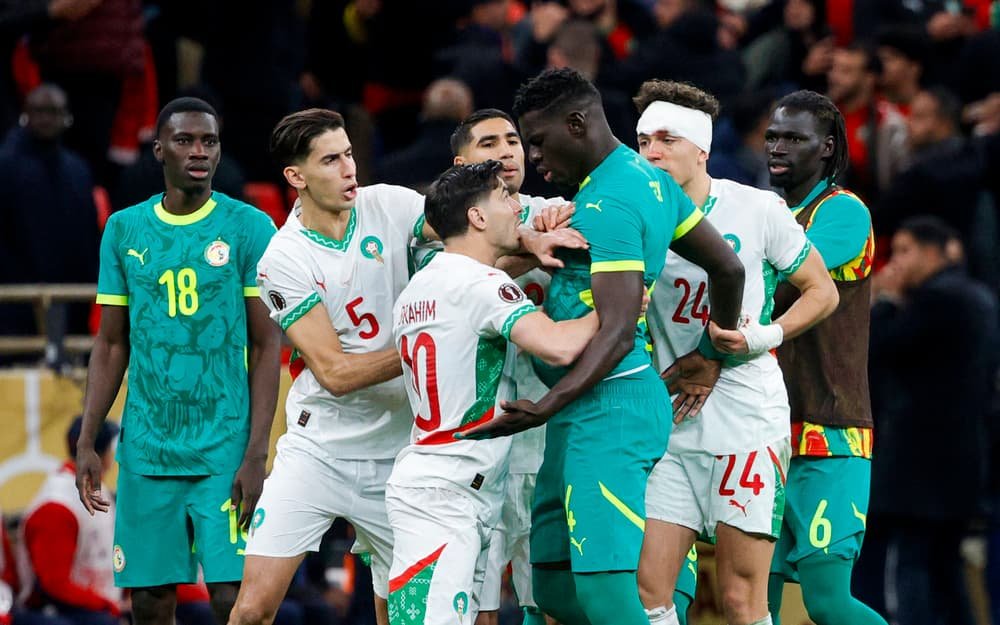
The Confederation of African Football has defended its decision to strip Senegalese Football Federation of the 2025 Africa Cup of Nations title, citing strict adherence to its competition regulations.
The ruling, which awarded a 3–0 victory to the Morocco national football team, was based on specific provisions within CAF’s rulebook.
Notably Articles 82, 83 and 84 that govern team conduct and match obligations.
CAF maintains that the decision was not discretionary but rather a direct enforcement of established regulations, which leave little room for interpretation in cases involving failure to fulfil match requirements.
Rulebook framework central to decision
Article 82 of CAF’s regulations states that any team which withdraws, refuses to play or leaves the pitch without authorisation is automatically considered to have lost the match and is eliminated from the competition.
This clause is understood to have formed the foundation of the ruling against Senegal, with CAF determining that the circumstances of the final fell within these parameters.
Article 83 further reinforces this position, stipulating that any team not present and ready to play at the scheduled kick-off time or within 15 minutes forfeits the match.
In such cases, the referee’s report is submitted to the organizing committee, which then confirms the outcome.
Article 84 outlines the consequences of such breaches, stating that the offending team loses the match by a 3–0 scoreline and is eliminated, unless the opposing side had already secured a more favourable result before the interruption.
Morocco confirmed as champions
Applying these regulations, CAF officially awarded Morocco a 3–0 victory, confirming them as AFCON 2025 champions.
The governing body has framed its decision as a straightforward application of its rules rather than a subjective judgment, a position that could prove significant if the case proceeds to arbitration.
Senegal’s remaining legal option
Despite CAF’s firm stance, Senegal still have the option to challenge the decision at the Court of Arbitration for Sport.
CAS represents the final authority in global sports disputes, and any ruling it delivers would be binding.
However, any appeal would focus not on the broader controversy surrounding the match, but on whether CAF correctly interpreted and applied its own regulations.
Key issues likely to be examined include whether the situation met the criteria outlined in Articles 82 and 83, whether proper procedures were followed, and whether any exceptional circumstances should have been taken into account.
Rules versus interpretation
The case now presents a contrast between strict regulatory enforcement and contextual interpretation.
CAF’s reliance on its rulebook suggests a zero-tolerance approach, where breaches automatically result in sanctions. Senegal, however, may argue that the situation surrounding the final was more complex than a straightforward violation.
What happens next
For now, Morocco’s status as African champions remains unchanged under CAF regulations.
The coming days will be critical as Senegal decide whether to escalate the matter to CAS, where the focus will shift from events on the pitch to legal scrutiny of how the rules were applied.
The outcome could either reinforce CAF’s regulatory authority or open debate about the flexibility of football governance at the highest level in Africa.