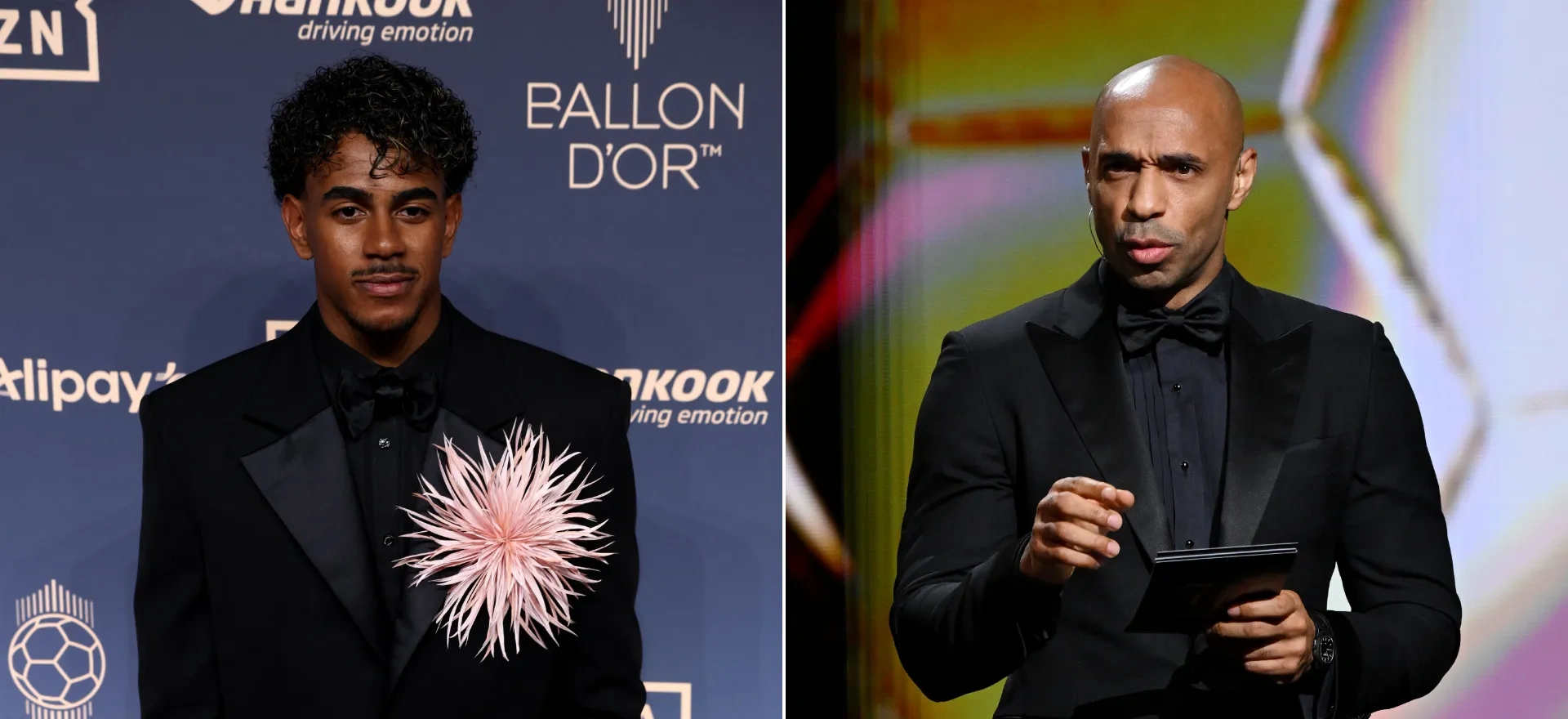
Harry Kane’s Ballon d’Or 2026 triumph was followed by a series of striking variations in the journalists’ voting, with Lamine Yamal omitted from two top-10 lists while Khvicha Kvaratskhelia and Pau Cubarsi received unexpectedly high rankings.
Yamal, the Barcelona and Spain forward, had been regarded as one of the leading contenders before the result was announced. However, neither the Belarusian nor Croatian journalists included him among their 10 preferred players.
The Belarusian journalist placed Lionel Messi first, followed by Rodri and Kane. Croatia’s representative ranked Rodri top, ahead of Erling Haaland and Messi.
Yamal was rated fifth by the Colombian journalist and fourth by the Vietnamese voter. He also finished fifth in Ecuador’s list, which included three French players among its top four: Michael Olise, Ousmane Dembele and Kylian Mbappe.
In Montenegro’s voting, Yamal was fourth behind Kane, Kvaratskhelia and Messi. The differing positions underline the contrasting assessments of his season, despite his status as one of the leading players of the emerging generation.
Rodri leads several lists as Kane drops to 10th
The surprises were not limited to Yamal. Rodri topped the choices of the journalists from Croatia, Vietnam and the Czech Republic, even though his position varied across the overall voting.
The Czech journalist placed Mbappe second and Messi third, but ranked Kane 10th. That came despite the England striker ultimately winning the award.
The Kosovo representative’s choices were closer to the final result. Kane was placed first, ahead of Mbappe and Kvaratskhelia.
Kvaratskhelia was among the players to benefit most from the differences between voters. He featured in the top three of more than one list, including the Kosovo journalist’s selection, where he was third behind Kane and Mbappe, as well as the Romanian journalist’s rankings.
Cubarsi, the young Barcelona defender, also made a notable impression. He was third in the Swiss journalist’s list and seventh in the Croatian voting.
Vitinha was another inclusion in Croatia’s top 10, highlighting the wide variation between journalists when ranking the leading players, including those who had not been considered among the main pre-award favourites.
How the voting works
The Ballon d’Or voting is based on three principal criteria: a player’s individual performance and decisive influence, team achievements and trophies, and sporting conduct and respect for fair play.
A representative from each participating country submits a list of 10 players. Points are then awarded according to the order in which those players are ranked.
Although the criteria are clearly defined, voters retain room to assess performances and the importance of achievements differently. The lists released so far demonstrate how significantly those judgements can vary.