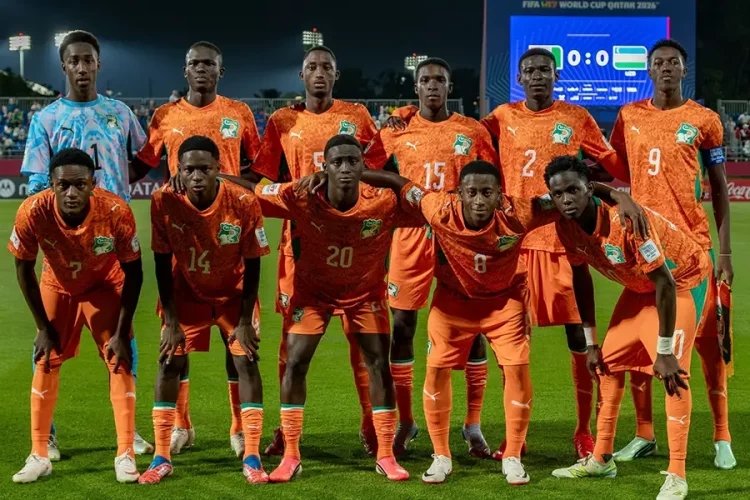
Algeria U17 face Montenegro on Tuesday, 24 November 2026, at 16:30 Algerian time in the second round of the group stage at the U17 World Cup in Qatar. Amine Ghimouz’s side need a response after surrendering a two-goal lead to lose 4-2 to Chile in their opening match.
Madel Bouali, manager of USM Alger’s under-15 team and a former coach at the Olympique Akbou academy, believes the defeat exposed weaknesses Algeria must address immediately if they are to keep their qualification hopes alive.
The young Fennecs made an impressive start against Chile, with Ilyes Mekkaoui and Yacine Abed putting them two goals ahead. However, Chile scored three times before half-time and added a fourth after the interval.
Bouali says Algeria lost control of the match by allowing their defensive block to retreat and creating excessive gaps between the lines. His main lesson from the defeat is that a team leading by two goals must manage both its dominant and difficult periods without surrendering the initiative completely.
Defensive organisation a priority
Bouali has identified greater defensive cohesion as the most urgent requirement against Montenegro. Coordination in central defence, particularly between Ilyes Mekkaoui and Kenzo Brignone, was problematic against Chile, while the midfield provided insufficient protection.
He considers a 4-2-3-1 formation a possible solution. Two holding midfielders could shield the centre-backs, narrow the spaces between the lines and reduce the danger of opponents breaking forward during transitions.
The wide players also have an important role. Algeria’s full-backs must coordinate their forward runs more effectively with the wide midfielders to prevent Montenegro creating numerical advantages on the flanks. Bouali’s preference is not for Algeria simply to defend deeper, but to form a compact unit capable of winning the ball quickly and attacking again.
Nechab could help Algeria regain control
Algeria also need to improve their use of possession. Under Chile’s pressure, they made repeated technical errors and gradually lost control of midfield.
Bouali believes the first pass must be cleaner and the player in possession must be given more options. Walid Nechab of Olympique Lyonnais could be important in that role, offering movement between the lines, helping circulate the ball and linking defensive and attacking phases.
Winning second balls will be just as significant. Greater aggression in that area would help Algeria interrupt Montenegro’s periods of control and sustain their own attacks.
Despite conceding four goals, Algeria showed attacking promise during the opening 15 minutes against Chile. Abed, the Paradou AC forward, displayed his finishing ability and his movement into spaces behind the defence. Khalil Touali, Mahdi Maghlout and Zadig Bendiab can also offer attacking solutions through their mobility and involvement in possession.
Bouali stresses, however, that attacking intent must not undermine the team’s balance. The forwards must contribute defensively, while the midfielders need to support attacks without leaving the defence exposed.
The psychological response will also be crucial. Losing after leading by two goals may have damaged the players’ confidence, and Ghimouz’s staff must help them overcome that frustration and regain composure.
Bouali does not want Algeria to force the game from the outset. He believes disciplined play, greater ball retention and efficiency in the final 30 metres could gradually give them the advantage. Managing any lead would provide another test of their ability to learn from the Chile defeat.
He predicts a 2-1 Algeria victory, provided the team improves its defensive cover, transition play and attacking efficiency. A win over Montenegro would revive Algeria’s qualification hopes before their final group match against the Dominican Republic.