The Confederation of African Football (CAF) has finalised its review of disciplinary matters from the Africa Cup of Nations final, confirming Morocco as champions and adjusting penalties previously imposed on players and the Royal Moroccan Football Federation. The Appeals Committee’s decisions have significantly reduced suspensions and financial fines while clarifying the application of CAF regulations.
Al-Sibari suspension reduced
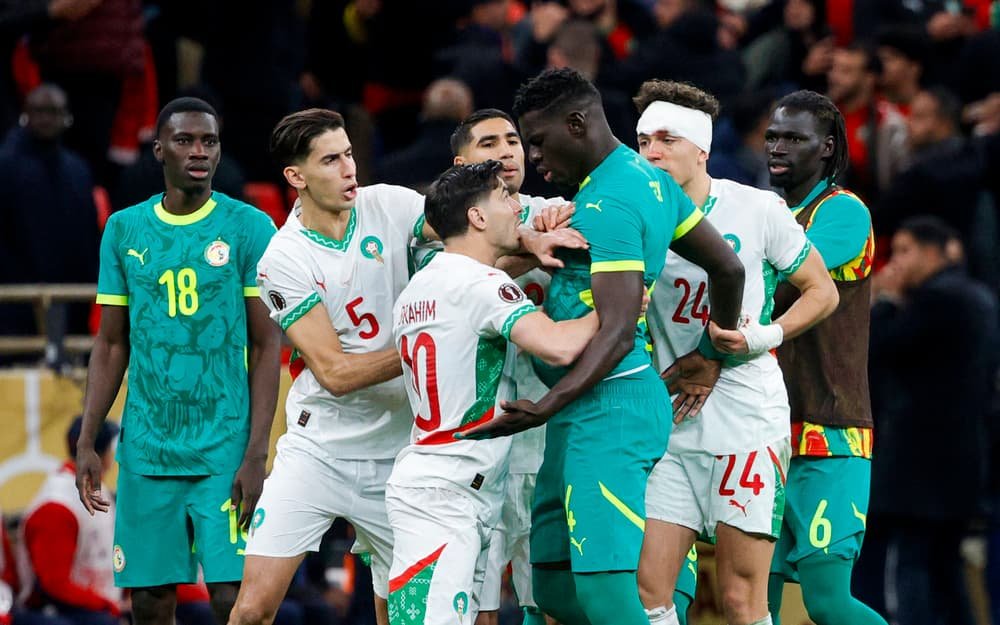
CAF’s Appeals Committee partially upheld the appeal concerning Moroccan player Ismail Al-Sibari. While confirming his violation of Articles 82 and 83(1) of the CAF Disciplinary Code, the committee reduced his suspension from three matches to two, with one match suspended. The $100,000 fine previously levied against Al-Sibari has been rescinded.
Morocco’s federation fines lowered
The committee also partially accepted the appeal regarding the conduct of Morocco’s ball boys during the final, reducing the financial penalty from $200,000 to $50,000. Similarly, a fine related to a laser incident aimed at Senegalese players was lowered to $10,000 from $15,000. However, the appeal concerning interference in the Video Assistant Referee (VAR) area was rejected, and the $100,000 fine for that infraction was upheld.
Other player and coach sanctions
Several suspensions were confirmed, including Achraf Hakimi’s one-match ban (with one match suspended). Senegalese coach Pape Thiaw’s suspension for five official matches and $100,000 fine were maintained. The committee upheld the two-match bans for Elieman Ndiaye and Ismaila Sarr.
Penalties against senegal
The Senegalese Football Federation faced multiple fines: $300,000 for fan misconduct, $300,000 for player and coaching staff conduct, and $15,000 for warnings issued to five players during the match. These sanctions reflect CAF’s commitment to enforcing disciplinary standards while recognising the context of the appeals.
Impact of CAF decision
The revised decisions by the CAF Appeals Committee not only confirm Morocco’s status as Africa Cup of Nations champions but also signal a recalibration of penalties to account for the appeals submitted by the Royal Moroccan Football Federation. CAF stated that the appeal was acceptable “in form and substance,” and that the conduct of the Senegalese national team fell under Articles 82 and 84 of the regulations, effectively validating Morocco’s claim to the title.
Conclusion
The appeals process has concluded with Morocco’s victory confirmed and several sanctions modified. While some penalties against players and staff remain, the committee’s rulings demonstrate a nuanced approach, balancing disciplinary action with fairness to the parties involved. Morocco can now focus on celebrating its continental triumph while Senegal and CAF assess the implications of the upheld fines and suspensions.