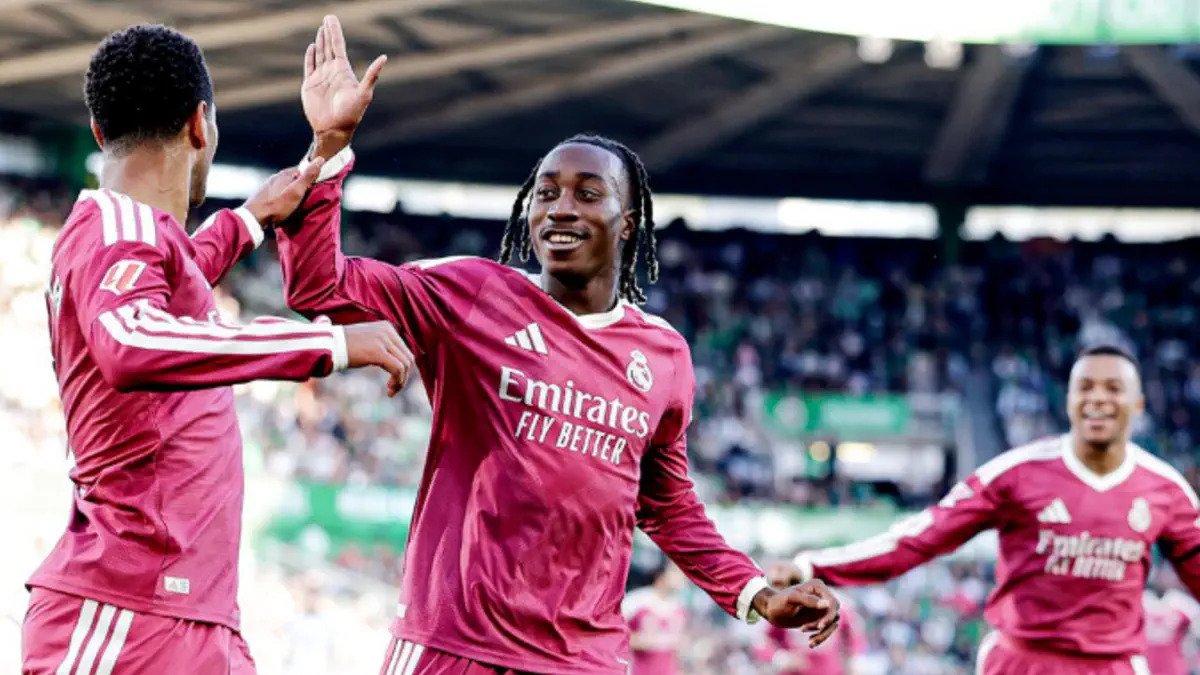
Kylian Mbappe missed out on the 2026 Ballon d’Or by just 28 points after three journalists excluded the Real Madrid forward from their top-10 selections, a decision that could have changed the outcome of the closely contested award.
The French international finished second with 1,027 points, narrowly behind Bayern Munich striker Harry Kane, who collected 1,055 points to claim the prestigious individual honour.
Voting records revealed that 97 of the 100 journalists involved in selecting the winner included Mbappe among their top 10 players. However, representatives from Scotland, Greece and Ukraine did not give the Real Madrid star a single point, leaving him out of their respective rankings.
The revelation has attracted attention because of the small margin separating the two leading candidates, with the final voting figures showing just how significant individual selections can be in determining the winner.
Three journalists leave Mbappe out of their rankings
The voting breakdown showed that Mbappe was overlooked entirely by three members of the international media panel, despite remaining one of the leading contenders throughout the competition.
The journalists representing Scotland, Greece and Ukraine did not include the Frenchman in any of their 10 selections. As a result, he received no points from those particular ballots.
The decision proved particularly interesting given that the difference between Mbappe and Kane was only 28 points when the final results were announced.
Under the Ballon d’Or voting system, journalists award 15 points to their first choice, followed by 12 points for second place and 10 for third. The points then decrease progressively, with the player ranked tenth receiving one point.
This means that even a single position in an individual journalist’s ranking can have a considerable effect on the overall standings.
How Mbappe could have overtaken Kane
The voting figures also raised the possibility that Mbappe could have won the award if he had received a higher position on just one of the three ballots that excluded him.
With Kane finishing 28 points ahead, the Real Madrid forward needed at least 29 additional points to move above the Bayern Munich striker.
Had any of the three journalists placed Mbappe third on their respective lists, he would have received 10 points from each ballot. However, a third-place ranking across all three lists would have earned him 30 additional points, enough to overturn the result by two points.
The figures highlight how closely contested the 2026 award was and how the decisions of individual voters contributed to the final outcome.
Kane leads first-place votes as Yamal finishes third
Despite Mbappe’s strong showing across the voting panel, Kane enjoyed greater support from journalists when it came to the top position.
The English striker received 40 first-place votes, considerably more than Mbappe’s 23, helping him build the points advantage needed to secure the award.
Barcelona youngster Lamine Yamal finished third in the overall standings after collecting 13 first-place votes.
Mbappe’s inclusion in the top 10 of 97 journalists nevertheless demonstrated the level of support he enjoyed among the voters. However, his total was not enough to prevent Kane from taking the prize.
Voting decisions raise questions over Ballon d’Or criteria
The exclusion of Mbappe by three journalists has prompted discussion about the criteria used to determine the rankings, particularly given his strong overall support among the voting panel.
While 97 journalists considered the French forward worthy of a place among the 10 leading candidates, the remaining three reached different conclusions based on their individual assessments.
However, their decisions do not necessarily suggest an attempt to prevent Mbappe from winning the award, as every journalist is entitled to select and rank players according to personal judgement and footballing evaluation.
Ultimately, the 2026 Ballon d’Or was decided by a narrow difference of 28 points, with Kane finishing ahead of Mbappe after a closely fought voting process.
The breakdown provides a clearer picture of how the individual rankings shaped the final result and why even a small number of voting decisions can become significant when the competition is separated by such a narrow margin.