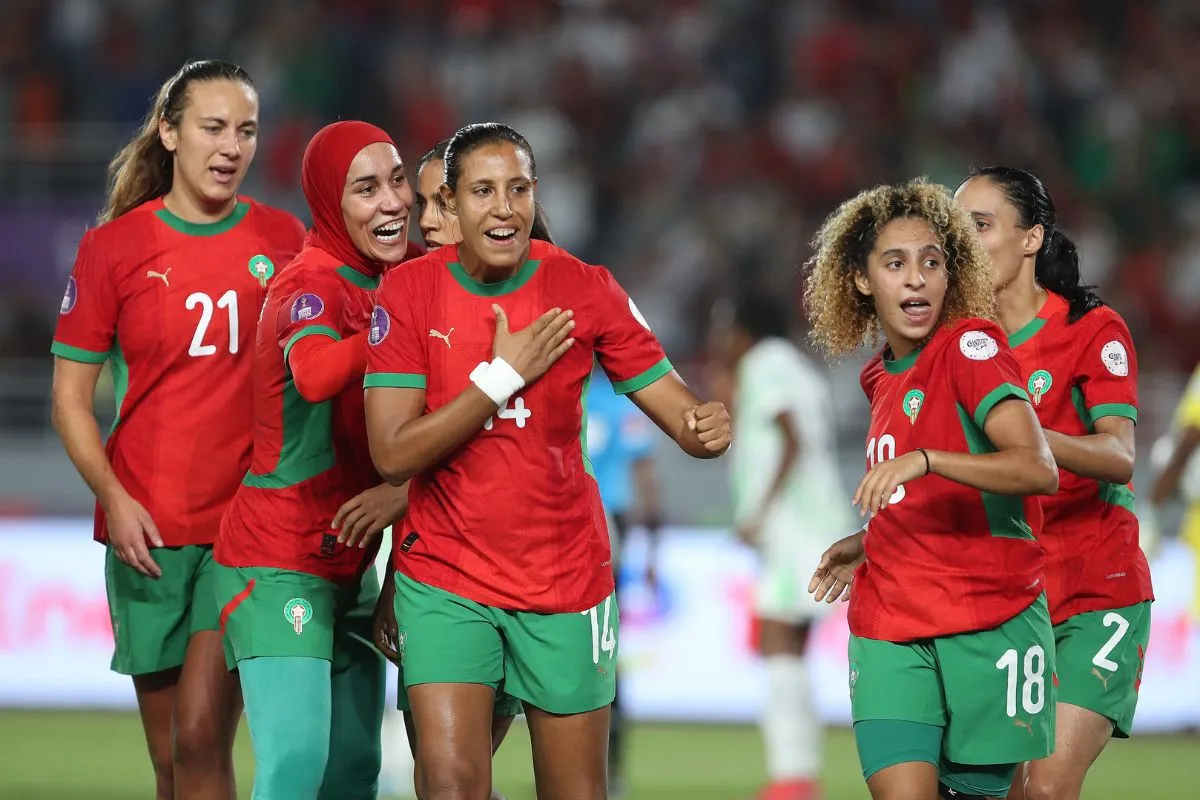
Morocco head coach Mohamed Ouahbi admitted his side’s mistakes proved decisive as the Atlas Lions‘ impressive 2026 FIFA World Cup campaign ended with a 2-0 quarter-final defeat to France.
The result sent the two-time world champions into the semi-finals while bringing another memorable World Cup journey to an end for Morocco, who once again carried the hopes of African football deep into the tournament.
Speaking after the match, Ouahbi said he remained proud of his players despite the defeat, acknowledging the challenge of facing one of the strongest teams in world football.
The Morocco coach explained that competing against a team with France’s quality demands complete concentration throughout the match, something he felt his young side could not consistently maintain.
He admitted that Morocco produced encouraging moments during the contest but said lapses in concentration ultimately proved costly against an opponent capable of punishing even the smallest errors.
According to Ouahbi, France’s strength lies not only in the quality of their individual players but also in their ability to exploit mistakes at the highest level of international football.
The Moroccan coach said that had been the difference between the two sides in the quarter-final.
Although disappointed with the result, Ouahbi stressed that his team had entered the match believing they could win.
He recognised, however, that Morocco were facing one of the tournament favourites and a squad packed with world-class talent.
The coach also pointed to the youth of his squad, suggesting that the experience gained during the tournament would be valuable as the Atlas Lions continue their development.
Morocco’s latest World Cup campaign has further strengthened the country’s reputation as one of Africa’s leading football nations.
After making history by becoming the first African and Arab country to reach a World Cup semi-final in 2022, the Atlas Lions followed that achievement by reaching the quarter-finals once again in 2026.
Their consistent performances over successive tournaments have demonstrated that Morocco can compete regularly with the world’s elite teams.
Despite the disappointment of elimination, the team’s progress has been widely viewed as another significant step in the growth of Moroccan football.
Ouahbi’s assessment reflected that broader perspective.
Rather than focusing solely on the defeat, he highlighted the lessons his players can take from competing against one of the strongest teams in international football.
Facing France, he suggested, required exceptional concentration from the first whistle to the last.
Against opponents of such quality, even brief moments of lost focus can determine the outcome of a knockout match.
France capitalised on those moments to secure victory and advance to the last four of the competition.
For Morocco, the defeat marked the end of another campaign that captured the imagination of supporters across Africa and the Arab world.