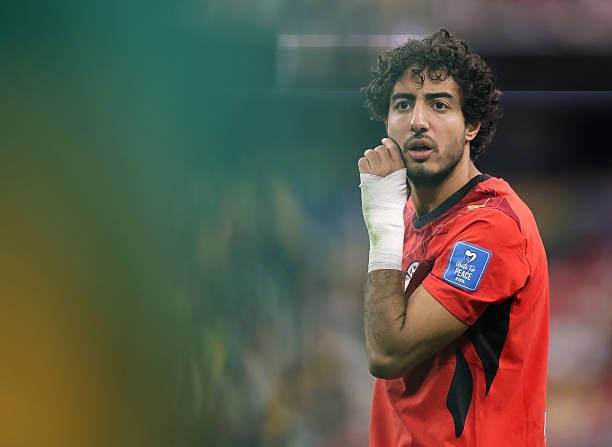
Mohamed Salah’s move to Trabzon has intensified the contest between Turkish clubs and Saudi Arabia for high-profile signings, raising questions about whether the Saudi project is beginning to lose some of its influence in the transfer market.
The deal, completed by the Turkish club after Salah had been linked for years with the Saudi Pro League – and Al-Ittihad in particular – is being viewed as more than a major acquisition for Trabzon. It has become a clear indication that financial power is no longer the only factor shaping the biggest moves in football.
For much of the recent transfer market, the competition between clubs was largely framed in terms of spending. The side willing to offer the largest sum was often considered to have the strongest chance of securing a sought-after player. That calculation has changed, however, as the appeal of a project itself has become increasingly important.
Clubs must now persuade a player of the wider value of joining them, rather than relying solely on the size of the contract. Sporting ambition, the atmosphere created around a team and the ability to turn a signing into a major public event have all become part of that process.
Salah’s arrival in Turkey provides the clearest example yet of that changing dynamic. His name had remained closely associated with Saudi Arabia for a long period, with Al-Ittihad repeatedly seen as the club most strongly connected to the possibility of his move. Trabzon’s success in completing the deal has therefore altered the focus of the transfer debate.
The outcome is important for Trabzon, but its significance extends beyond one club. It has prompted a wider question over whether Turkish teams are now beginning to outperform Saudi clubs when competing for the biggest names in the market.
That challenge is being strengthened by the scale of spending among Turkey’s leading clubs. Their financial commitment, combined with their ability to create a powerful emotional and commercial response around star players, has made their rivalry with the Roshn Saudi League more visible than ever.
The contrast is not simply about which league can make the most attractive financial offer. Saudi Arabia’s football project has been associated with substantial investment, while Turkish clubs have shown that the competition can also be shaped by the environment surrounding a player and the reaction generated by his arrival.
In that sense, Salah’s move represents a change in the balance of the argument. It does not erase the financial strength of Saudi clubs, nor does it settle the wider contest between the two leagues. But it demonstrates that a club from Turkey can win a deal that had for years been linked to Saudi Arabia and Al-Ittihad.
The transfer market is therefore entering a different phase. Money remains central to the competition, yet the ability to build a compelling project around a player is becoming just as significant. Salah’s move to Trabzon has placed that shift at the centre of the debate and given Turkish football a notable statement of intent.