Martin Demichelis says RB Leipzig are “not on the same level as Bayern Munich” at present, but believes his new club can continue to grow after being encouraged by the energy he has seen since taking charge.
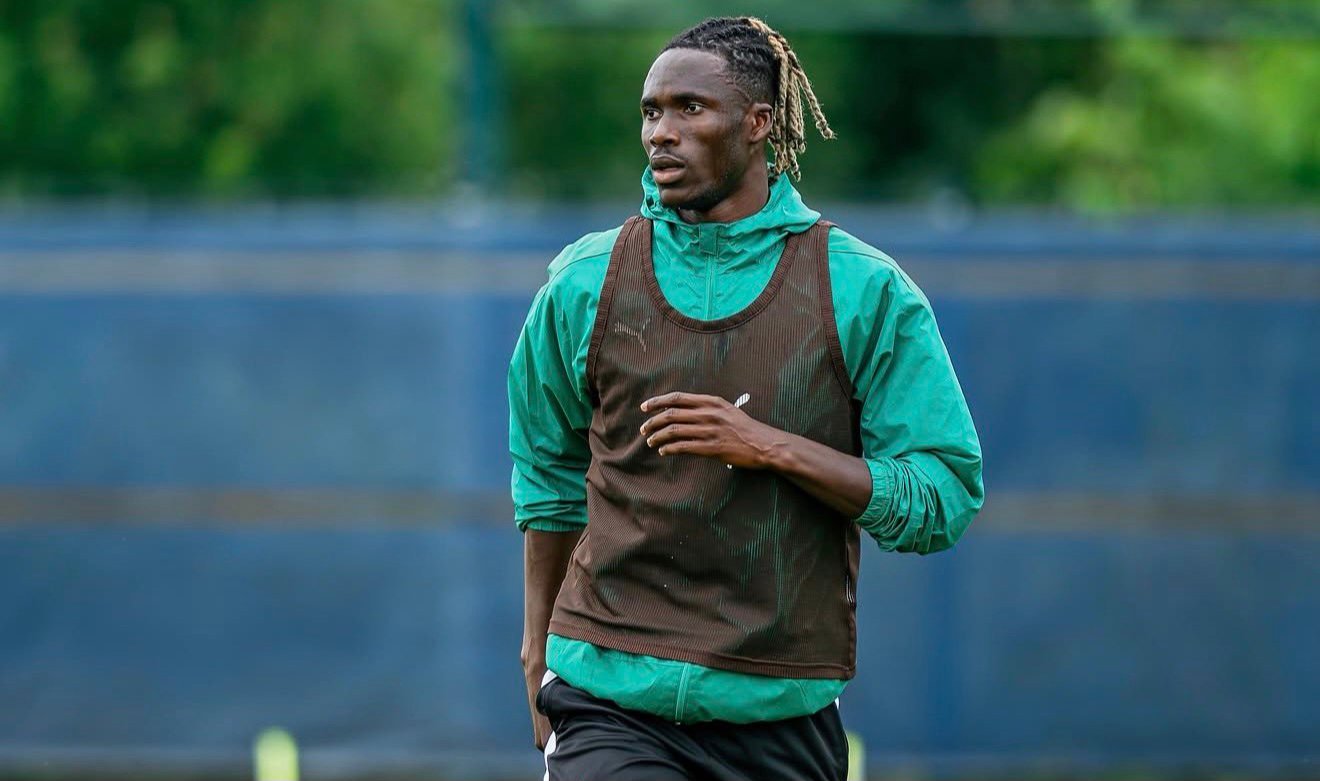
Speaking to Sport Bild, Demichelis discussed his move to Leipzig, the club’s approach to developing young players and the departure of Yan Diomande, who he said had dreamed of joining Real Madrid since childhood.
“Slowly but surely!” Demichelis said. “We have to be realistic: currently, we are not on the same level as Bayern Munich. However, anything is possible in football.”
The former Bayern Munich defender spent 12 years living in Munich and regards the city as his “second home”. Bayern gave him his opportunity as a young player, and he said the club’s identity remains important to him.
“Slogans like ‘Mia san mia’ (we are who we are) mean a lot to me,” he said. “So being able to come to the Allianz Arena is indeed special, especially since it’s my first time here as a coach. However, now I am also very proud to be the head coach of RB Leipzig.”
Demichelis, who previously coached in Argentina, Mexico and Spain, said he accepted the Leipzig job despite having recently renewed his contract with Mallorca. Leipzig finished third in the Bundesliga last season, and he described the move as a “huge opportunity”.
“I had a great time in Germany as a player. Now, it’s time to prove myself as a coach,” he said. “German culture suits me very well: I like discipline, and I like that friendly but strict approach.”
He believes Leipzig’s long-term model makes the club different from its rivals. The club recruits young and ambitious players, develops them over several seasons and then helps them take the next step in their careers.
“No other club can implement this philosophy as steadfastly,” Demichelis said. “Only through revenue from player transfers do we have the opportunity to become a big club.”
He said Diomande had made significant progress in a short period and would have continued to receive opportunities had he remained at Leipzig.
“Which coach wouldn’t want to work with him? No one,” Demichelis said. “But I have to set Diomande aside and talk about a more general issue.”
According to Demichelis, playing time must be earned through performances, while unhappy players should discuss their situation with the club in search of a solution that works for everyone.
“If a player is unhappy, then you should sit down and talk to the player to find a solution that makes sense for all parties,” he said.
He added that there were “no losers” in Diomande’s departure because Leipzig received a record transfer fee and the player’s wishes were clear.
“Diomande once told me that he had dreamed of joining Real Madrid since he was a child,” Demichelis said. “Given that, his wish was already very clear.”
Demichelis also outlined the style he wants Leipzig to adopt. Pressing and transitions will remain important, particularly because the squad has considerable pace, but the new coach wants his side to become comfortable controlling possession.
“I like possession,” he said. “We must quickly teach the team to enjoy having the ball. Controlling the game, dominating the game, and making the opponent run ragged – that’s a high art.”
As a former centre-back, Demichelis also places particular emphasis on defensive solidity.
“If we can keep a clean sheet, I feel very comfortable. That’s the best thing!” he said. “Because great success belongs to the teams that concede the fewest goals, not those who score the most.”
He said his principles were established early in his coaching career and fitted naturally with Leipzig’s identity, including the slogans “Intensity is our identity” and “Watch out, the Red Bulls are coming.”
Demichelis believes the club already has the discipline required for success, although he does not view every breach of the rules in the same way. A player who consistently works hard and enjoys training, he said, should not necessarily be judged more harshly for arriving one minute late.
His approach to referees will be passionate but respectful.
“Whatever the referee blows is right,” Demichelis said with a laugh. “Of course, I will be full of passion on the sidelines. But respect is very important.”
He recalled receiving only one red card in his playing career, saying the dismissal came after he kicked the ball.
Demichelis also reflected on his relationship with former Bayern coach Ottmar Hitzfeld. He had been asked to play in central midfield despite being more naturally suited to centre-back, and said an agreement for one match gradually became a longer-term request.
“I told him that. Then I was suspended,” Demichelis said. “Hitzfeld was a gentleman, but that scene did happen.”
The Argentine also revisited the 2014 World Cup final, when Germany defeated Argentina after Mario Gotze scored the winning goal. Demichelis said Argentina had been relieved when Miroslav Klose was substituted because they had successfully prevented him from scoring, but then missed three important chances before Gotze struck.
“I think fate had already decided that everything was meant to happen that way,” he said. “I have accepted that.”
German supporters still ask him to sign photographs of Gotze scoring the goal, but Demichelis refuses.
“I won’t sign it, but Mario should,” he said. “That was his highlight, not my moment of loss.”
Demichelis said communication has not been a major obstacle at Leipzig. He speaks a lot of German, while his English is improving, and the squad includes several French-speaking players who use a translator. Spanish, he joked, is the easiest language for him.
For the coach, adapting quickly to the culture is more important than speaking every language perfectly. He compared training habits in Germany and Argentina, saying Argentine players could spend 30 minutes in a practice exercise focused on winning the ball because “they love that kind of training”.
“Winning the ball is in their blood,” Demichelis said. “That’s where the passion lies.”
He also shared stories from his playing days and childhood. His father ran a drinks shop selling wine and beer, although Demichelis said he did not like beer and only drank a Radler at Oktoberfest. Under Felix Magath, Bayern players were required to meet at the hotel bar between 21:00 and 21:15 on the night before a match and have a beer, but Demichelis drank tea instead.
He now occasionally drinks red wine with dinner, although tea remains a constant part of his life.
“As an Argentinian, tea is always available, no matter the time,” he said.