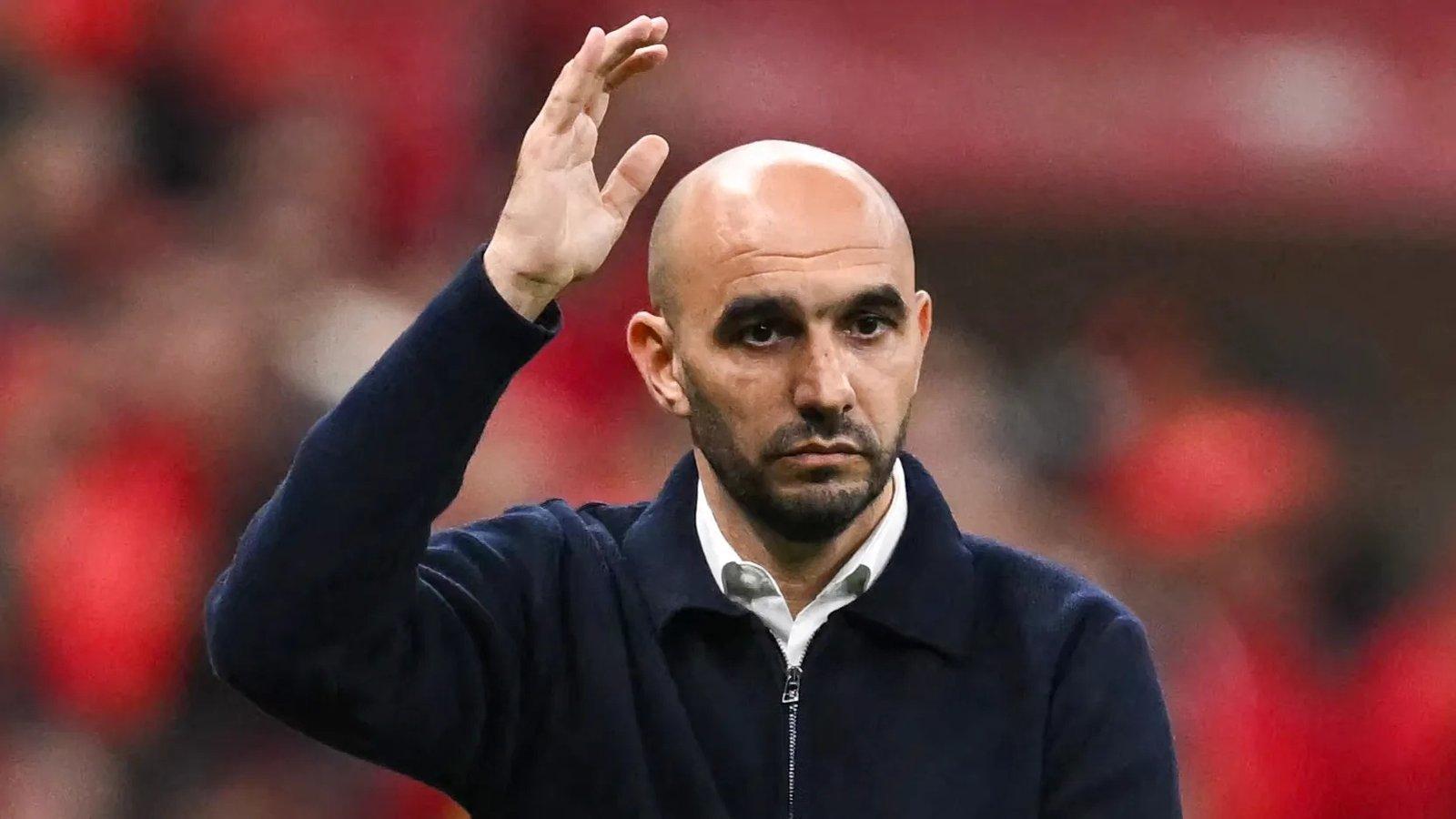
Morocco coach Mohamed Ouahbi believes the Atlas Lions are increasingly being regarded as genuine contenders on the world stage after reaching the quarter-finals of the 2026 FIFA World Cup.
Morocco’s campaign ended with a 2-0 defeat to France, but their performances have strengthened their reputation as one of international football’s rising forces.
Speaking at the Confederation of African Football’s strategy conference in Santa Maria, Cape Verde, Ouahbi said an analysis of the tournament had highlighted Morocco’s progress and the effectiveness of their tactical approach.
The conference featured a presentation by FIFA director of global football development Arsène Wenger and his team, examining the performances of Africa’s 10 representatives at the 2026 World Cup.
“It is very rewarding, and we are very proud to be the team that made the biggest impression in many aspects of the game,” Ouahbi said.
The Moroccan coach pointed to his team’s high pressing, aggression, possession play, ability to manage counter-attacks and defensive work at set-pieces as areas that had attracted particular attention.
For Ouahbi, the recognition reflects a change in how Morocco are perceived internationally.
“We felt that, when you are Morocco today, people listen to you and follow you, and that Morocco is working very, very well at the moment,” he added.
Morocco’s latest achievement builds on their historic run at the 2022 World Cup in Qatar, where they became the first African nation to reach the semi-finals.
Ouahbi, who took charge only three months before the 2026 tournament, helped the Atlas Lions reach the last eight again, making them the first African team to reach the quarter-finals at consecutive World Cups.
Morocco drew 1-1 with Brazil in the group stage before eliminating the Netherlands on penalties in the round of 32. They then recorded a convincing 3-0 victory over co-hosts Canada to reach the quarter-finals, where France ended their campaign.
Despite the disappointment of missing out on another semi-final, Ouahbi insists Morocco must continue developing rather than become complacent with their progress.
“We have to continue along this path and learn the lessons. It is also good to exchange ideas with the African countries. We need the African countries in order to perform and play high-level matches,” he said.
His message points to a broader ambition: sustaining Morocco’s rise while encouraging stronger competition and cooperation across African football as teams begin preparing for the next World Cup cycle.