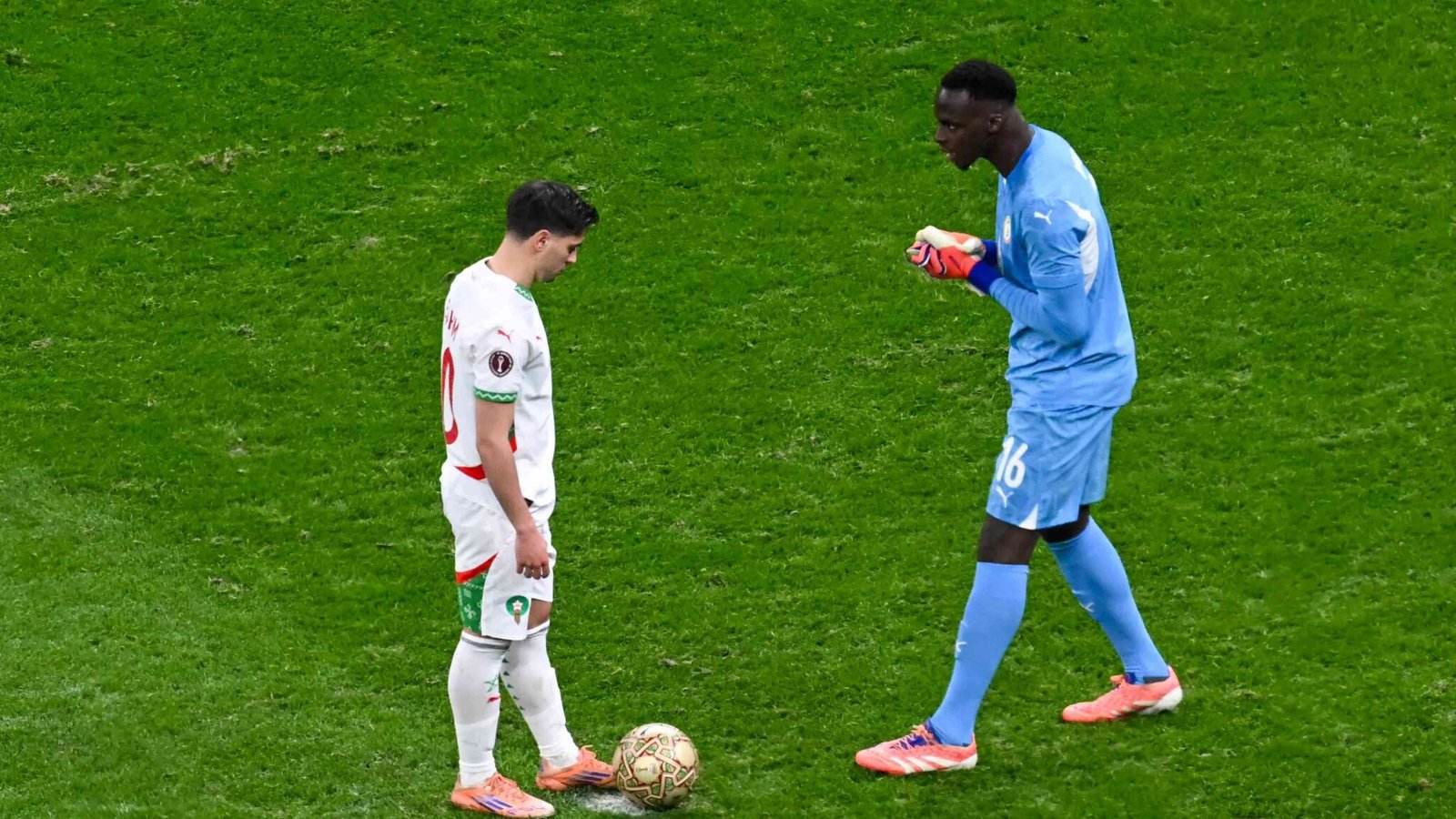

The Court of Arbitration for Sport (CAS) will hear arguments from Senegal and Morocco on Thursday, 8 October, over two conflicting interpretations of the Africa Cup of Nations 2025 final.
Senegal argue that the match result cannot be overturned after the game was completed, while Morocco rely on Articles 82 and 84 of the competition regulations to challenge the outcome. The hearing will take place behind closed doors.
The dispute centres on Senegal’s temporary withdrawal from the pitch in protest at the refereeing, their subsequent return and referee Jean-Jacques Ndala’s decision to restart and finish the match. Senegal won 1-0 after extra time, but the CAF appeals committee later overturned the result.
Both sides believe they are legally justified.
“We know how we won this Africa Cup of Nations. We know what happened one February night in Morocco,” Senegal goalkeeper Edouard Mendy told reporters in March.
Former Morocco manager Walid Regragui responded several months later on Atheer: “For me, I am an African champion, whether people like it or not.”
Senegal’s Football Federation (FSF) is expected to make Law 5 of the IFAB’s Laws of the Game a central part of its case. That law establishes the referee’s authority over incidents during a match and says their decisions on facts connected with play are final.
Senegal will argue that Ndala permitted them to return, resumed the match, and then blew the final whistle. Sports lawyer Pius Ndubuokwu said on SABC: “They went back, the match continued and the referee blew the final whistle. The CAF Appeals Committee therefore does not have the power to overturn that decision.”
Senegal’s Spanish lawyer Juan de Dios Crespo-Perez described the case as potentially significant for football beyond Africa when the appeal was announced in March.
“For a completed match to be refereed again is unprecedented. It could change the world of football,” he said, adding that the case concerned not only “the dignity of African football”, but “all football”.
The Senegalese defence may also point to the CAF disciplinary regulations and the lack of a specific provision covering a team that temporarily leaves the field before returning to complete a match. It is expected to distinguish the incident from cases in which a team permanently refused to resume play, including the 2019 African Champions League final between Esperance Tunis and Wydad Casablanca.
Morocco’s case is based on a literal reading of Articles 82 and 84. Those provisions state that a team which refuses to play or leaves the field before the match has ended without the referee’s permission is deemed to have lost and may be eliminated, with a 3-0 defeat.
Fouzi Lekjaa, president of the Royal Moroccan Football Federation (FRMF), said in an interview with Jeune Afrique: “We believe that the rules of football, the legal rules governing a football match, were obstructed and violated by our opponent. FIFA changed its regulations immediately afterwards to state that a player who leaves the field is punished with a red card. That reinforces our position.”
He added: “You cannot have 15, 20 or 30-minute pauses in a match. That is not football, it never has been and never will be.”
Morocco can also argue that Senegal’s departure was substantial: at one stage, only three Senegalese players remained on the pitch, while the Laws of the Game require at least seven players for a team to continue.
CAS must now weigh the regulations against the proportionality of any punishment and the integrity of the sporting result. The central question is whether Senegal’s temporary withdrawal automatically triggered Articles 82 and 84, or whether the restart and final whistle preserved the result while leaving open the possibility of individual disciplinary sanctions.