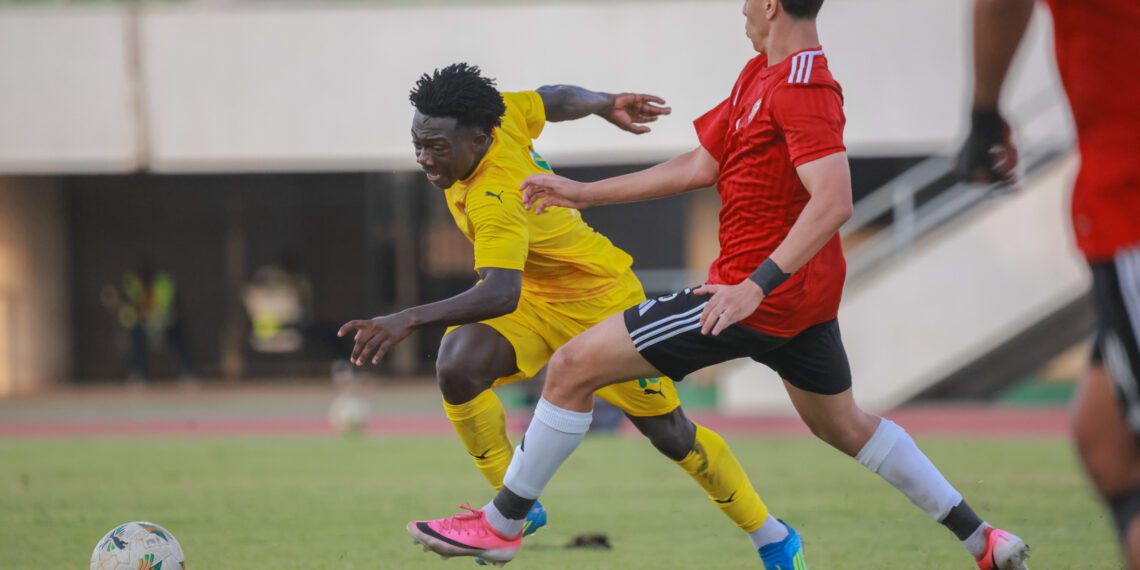

Herve Renard suffered his first defeat since returning as Cote d’Ivoire manager as a heavily changed side lost 1-0 to Cameroon in Saturday’s derby.
The result highlighted a clear contradiction between the Frenchman’s pre-match message and his team selection. Renard had insisted there were no friendly matches at international level and urged his players to approach the meeting with Cameroon as seriously as an official fixture.
He then made 10 changes to the side that had beaten Somalia, with Bil Nsongo scoring the only goal of the game in the 46th minute.
The decision to rotate was partly understandable. Renard’s first squad since taking charge again had already signalled his intention to refresh the team, with eight players receiving their first call-up. Emmanuel Agbadou was the only player to retain his place from the victory over Somalia.
Franck Kessie, Yahia Fofana, Evan Ndicka and Elye Wahi began on the bench, while Christ Tape, Kassoum Ouattara and Amadou Kone made their international debuts.
Against a Cameroon side that had made far fewer changes, Cote d’Ivoire struggled to develop the understanding required from such an experimental line-up. Cameroon capitalised soon after half-time, with Nsongo putting them ahead.
Renard accepted responsibility for the loss and made no attempt to offer excuses.
“I take responsibility for this defeat. I wanted to rotate the team,” he said. “I took risks with the starting XI because it was the only opportunity to test the new players.”
His reasoning was logical. A manager cannot demand greater competition for places without giving alternatives a genuine opportunity to prove themselves. However, the defeat was harder to dismiss after Renard’s insistence that the match should be treated like a competitive fixture.
Yan Diomande acknowledged that the experiment had failed, saying: “The coach wanted to try something. Unfortunately, it did not work.”
The loss has no impact on Cote d’Ivoire’s competitive record and came after two victories in official matches. It did, however, offer an early indication of the gap between some of the newcomers and the established players.
The second-half introductions of Elye Wahi, Yan Diomande, Evan Ndicka and Malick Yalcouye could not change the outcome against a disciplined Cameroon team. The problems, therefore, were not confined to the starting line-up.
The defeat represents an initial warning for Renard, who returned to the role with the added prestige of having led Cote d’Ivoire to the 2015 title. He still retains considerable goodwill, but must quickly find a balance between continuing to assess his squad and maintaining the winning mentality he has demanded from his players.