Morocco face a difficult period of uncertainty following the Court of Arbitration for Sport’s (CAS) decision to overturn the Confederation of African Football’s (CAF) ruling and restore Senegal as 2025 Africa Cup of Nations champions.
The Royal Moroccan Football Federation (FRMF) had successfully challenged Senegal’s original 1-0 victory before CAF’s Appeal Board in March, with the decision awarding the Atlas Lions a 3-0 victory by forfeiture.
However, that outcome was overturned on Tuesday, November 24, after CAS unanimously upheld Senegal’s appeal, reinstating the decision of CAF’s Disciplinary Board and confirming the original result of the final.
The ruling represents a major setback for Morocco, who had briefly been recognised as African champions following CAF’s controversial intervention.
With the legal battle now decided at CAS, attention turns to the Moroccan federation’s possible next steps and the implications of the verdict for the country’s football ambitions.
Can Morocco appeal the CAS decision?
Despite losing at CAS, Morocco are not entirely without legal options.
The FRMF could seek to challenge the ruling before the Swiss Federal Supreme Court, which is the highest judicial authority responsible for reviewing CAS arbitration awards.
However, such a challenge would not amount to a fresh hearing of the Senegal-Morocco dispute.
Under Swiss arbitration law, CAS decisions can only be challenged on limited legal grounds, including the improper constitution of an arbitration panel, a lack of jurisdiction, a violation of the parties’ right to be heard or a breach of public policy.
The deadline for bringing such a challenge is generally 30 days from notification of the award.
This means Morocco would need to establish a recognised procedural or legal defect rather than simply argue that CAS reached the wrong conclusion about the AFCON final.
The Swiss Federal Supreme Court does not have the authority to reconsider the match itself or decide who deserved to win on the pitch.
CAS also confirms that its awards can be reviewed by the Swiss Federal Tribunal, although only on specific grounds.
Could Morocco revisit the alleged phone call controversy?
Another issue that could influence Morocco’s response is the reported telephone conversation between Senegal Football Federation president Abdoulaye Fall and one of the CAS arbitrators.
Before the verdict was announced, the Moroccan federation reportedly informed CAS of an alleged Sunday phone call involving Fall and German arbitrator Ulrich Haas.
The complaint raised questions about the independence and impartiality of the arbitration proceedings.
However, Reuters reported that it could not independently verify whether the conversation took place or establish what was discussed.
The allegation has therefore not been established as evidence of misconduct.
Morocco could seek to pursue the matter through the appropriate legal procedures if it believes there are grounds to challenge the integrity of the arbitration process.
Any such attempt would require evidence capable of meeting the relevant legal threshold. A complaint alone would not automatically invalidate the CAS ruling.
What happens to the AFCON title?
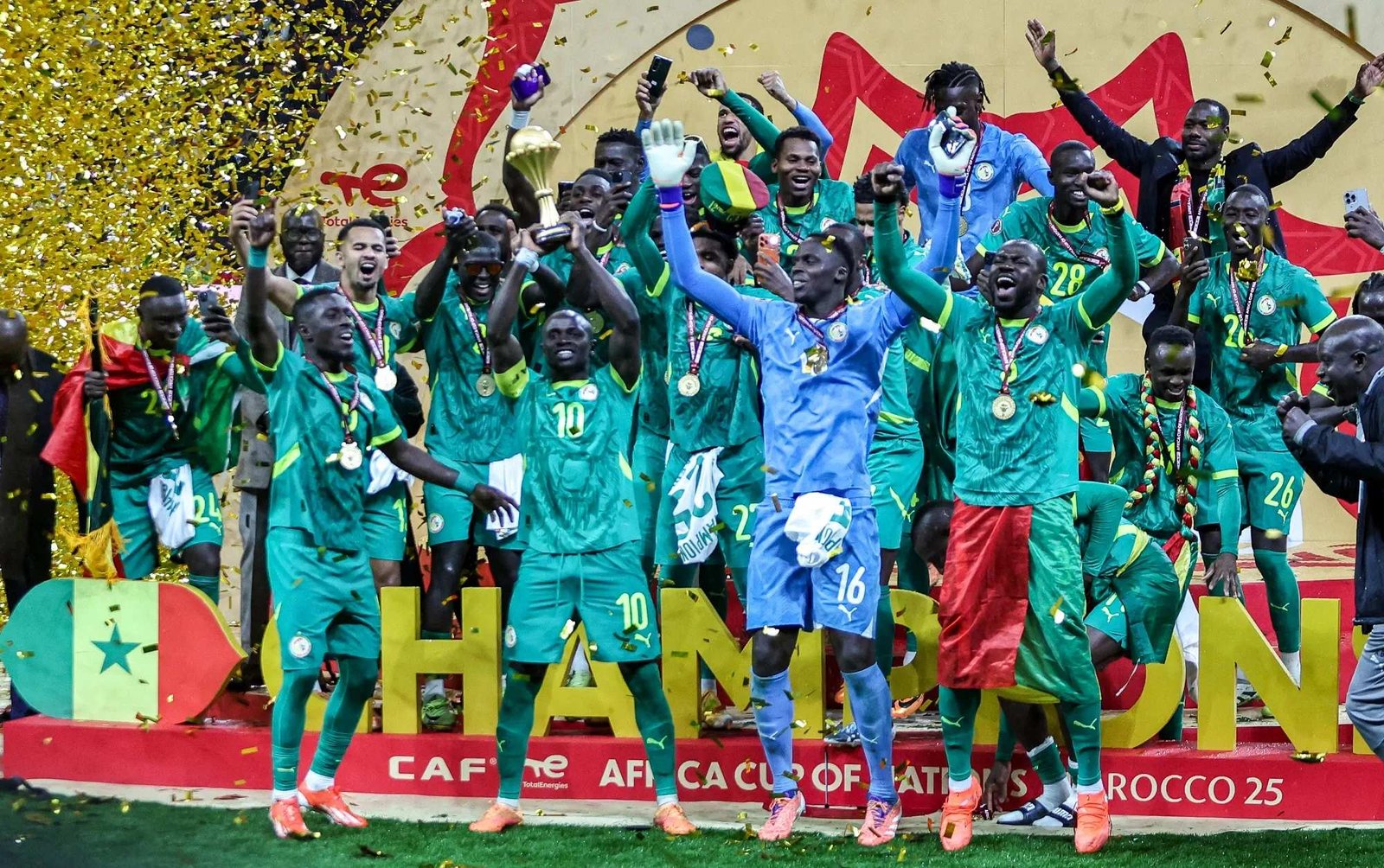
For now, Senegal are officially recognised as the 2025 African champions following CAS’s decision.
The court set aside CAF’s Appeal Board ruling and reinstated the decision of its Disciplinary Board, confirming Senegal’s 1-0 victory in the final.
Consequently, Morocco lose the championship previously awarded to them, while Senegal retain the title they initially secured through Pape Gueye’s extra-time winner in Rabat.
Unless the CAS award is successfully challenged through the limited legal mechanisms available, the decision stands.
A setback for Morocco’s football ambitions
The ruling is also a significant development for Moroccan football, which had invested heavily in strengthening its position as one of Africa’s leading football nations.
Morocco had hoped to build on their performance at the tournament and their status as hosts, but the reversal of CAF’s decision means the country’s wait for another AFCON title continues.
The episode could also prompt discussions within the FRMF about its legal strategy, relationship with CAF and approach to future international competitions.
For a federation that has increasingly positioned itself as an influential force in African football, the outcome represents an important moment in its relationship with the continent’s governing structures.
What happens next?
The immediate focus will be on the Moroccan federation’s official response and whether it intends to explore the possibility of challenging the CAS award before Switzerland’s highest court.
However, the legal requirements for overturning a CAS decision are demanding, and Morocco cannot simply reopen the case because it disagrees with the outcome.
For Senegal, the ruling brings relief after months of uncertainty and restores their status as two-time African champions.
For Morocco, the task now is to decide whether there are sufficient legal grounds for further action or whether to accept the outcome and turn attention towards future competitions.
One thing is clear: the AFCON 2025 final has produced one of the most remarkable legal controversies in the competition’s history, and its consequences will extend beyond the two countries involved.